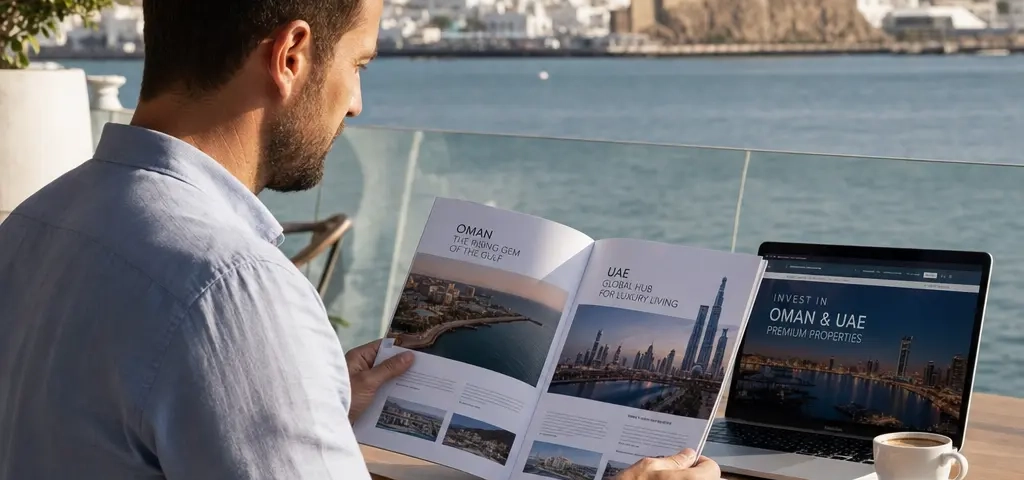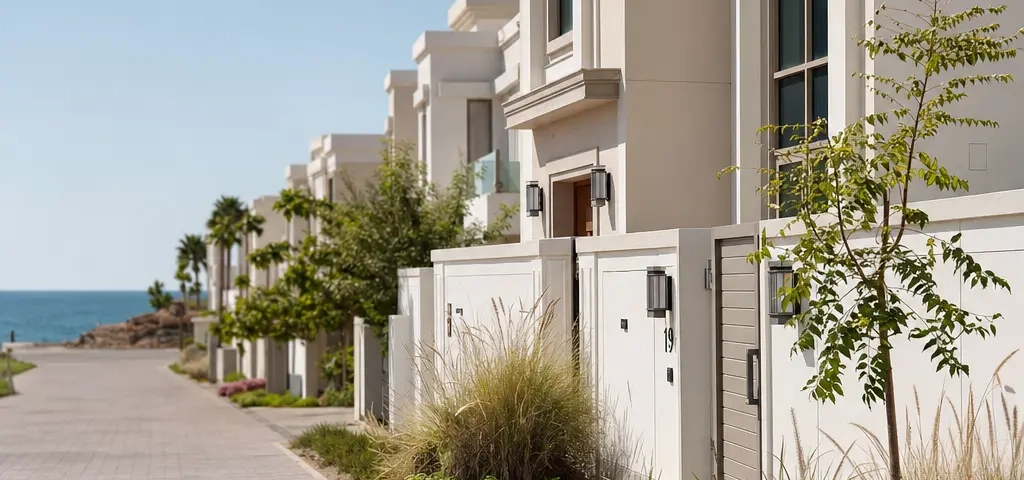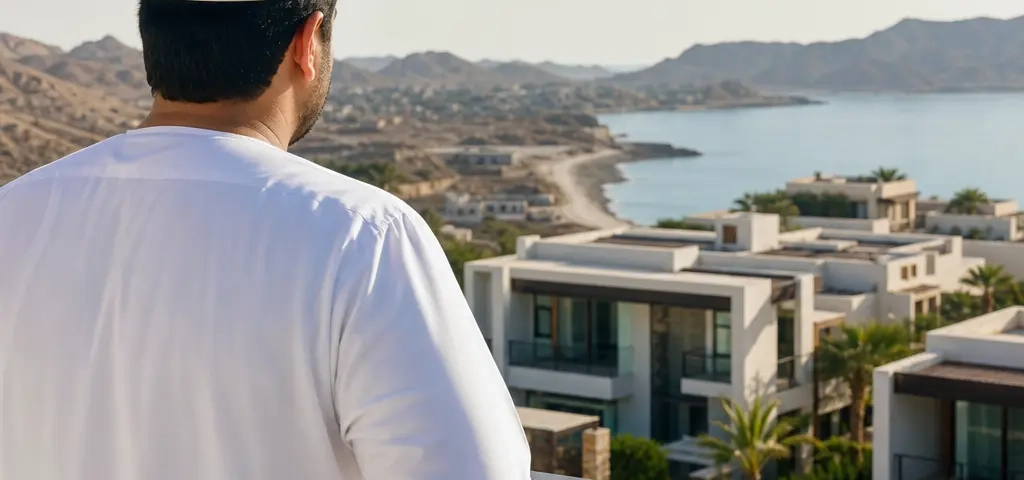
Investor Reviewing Premium Property In Yiti, Oman For The Oman Golden Visa 2026

Oman Golden Visa 2026: Residency by Real Estate Investment Explained

At a glance

As of 2026, Oman’s Golden Residency programme offers a long-term residency route tied to qualifying investment. The framework was relaunched in 2025, and the official threshold is a qualifying investment from OMR 200,000 for a renewable 10-year residency. For real estate buyers, the key distinction is between the long-standing property-owner residence visa in integrated tourism complexes and the newer Golden Residency framework for larger-ticket investors.

Oman’s residency-by-investment framework changed materially in 2025 and 2026. The headline figure investors now see is OMR 200,000, the qualifying threshold cited by official sources for the renewable 10-year Golden Residency route. At the same time, Oman still operates the established property-owner residence visa for buyers inside designated integrated tourism complexes, typically issued in 2-year renewable periods. For expatriates and international buyers, the practical question is not just “Can I buy?” but “Which residency route matches my budget, timeline, and exit plan?”

We see this distinction cause confusion in buyer conversations. A client may hear “property gives residency” and assume every purchase leads to the same outcome. In practice, Oman separates standard property-linked residence from Golden Residency. That matters for capital planning, family relocation, and how you compare prime projects in Muscat and Yiti. The routes available to a spouse and children are compared in our guide to family residency in Oman after a home purchase. Once the residence card is issued, the practical layer begins — see how expats open a bank account in Oman.

Worth knowing

In Oman’s official investment messaging, the Golden Residency threshold is a qualifying investment from OMR 200,000 for a renewable 10-year permit, while the standard property-owner residence visa for integrated tourism complexes is issued for 2 years and renewed under the applicable rules.

What the Oman Golden Visa means in 2026

In market language, “oman golden visa” usually refers to Oman’s Golden Residency programme, officially launched in 2025 as a long-term residence route for qualifying investors. According to Invest Oman, the programme includes several pathways, and one of them is ownership of completed real estate units within integrated tourism complexes. The framework was relaunched on 31 August 2025 with a single qualifying threshold from OMR 200,000 for a renewable 10-year residency, and the permit remains renewable while the qualifying investment or property is held.

That threshold is the first number every buyer should verify. It is materially higher than the entry point for many ordinary property transactions in Oman, which means not every freehold purchase automatically qualifies for Golden Residency. Investors should assess the visa route before they reserve a unit, not after signing the SPA. For the broader route, see how to get residency by buying property.

Golden Residency vs standard property residence

The second number to know is validity. Golden Residency is structured for 10 years. By contrast, the government service for property owners in integrated tourism complexes states a residence visa valid for 2 years. Earlier regulations also established automatic renewal cycles every 2 years for up to 6 years in the property-owner category, while 2026 amendments eased certain procedures for owners and investors.

In our assessment, this creates a two-track market. Buyers around or above the qualifying threshold may be targeting a long-term residency outcome. Buyers below that mark may still secure property-linked residence, but should not assume they are entering the same programme.

Watch out for

Rules were amended in June 2026 under Official Gazette No. 1653. If you are buying off-plan or purchasing before final registration is complete, confirm with the developer and legal counsel which residency benefit applies at your exact stage of ownership.

How real estate qualifies foreign buyers for residency

For foreign nationals, Oman’s real estate route is built around integrated tourism complexes, often abbreviated as ITCs. These are the designated zones where non-Omani buyers can own qualifying real estate. For the wider picture of what foreigners can buy in Oman, eligibility depends on the zone and project. In practice, the best-known names in the market include Al Mouj Muscat, Muscat Bay, Jebel Sifah, Hawana Salalah, and AIDA in Yiti, developed through names such as DarGlobal, OMRAN, Muriya, and Eagle Hills Muscat.

This is where AIDA Oceana sits strategically. Yiti is part of the premium coastal expansion south of central Muscat, and it is being positioned alongside branded and lifestyle-led communities rather than commodity housing stock. If a buyer is comparing residency-linked ownership options, projects such as Marriott Golf Residences, Aida Oceana Villas, and Trump Cliff Villas are naturally part of that shortlist.

What changed in 2026

One of the more important updates came in June 2026, when Oman amended parts of the Executive Regulations of the Foreigners Residence Law. Reporting on the change notes that foreign buyers of land designated for construction or real estate units that had not yet completed registration procedures could access easier visa handling, based on certification from the competent authority. That matters for off-plan investors, who previously faced a more rigid timing issue between purchase, registration, and residency processing.

There is also a legal consequence on exit: if ownership of the unit is transferred, the associated residence status can terminate. For investors using a resale strategy, residency continuity should be planned alongside the sale timeline.

How to get the Oman Golden Visa: step by step

In 2026, the application runs through Oman’s state digital channels rather than private intermediaries. For a real estate route, the sequence in practice looks like this:

1. Confirm the qualifying route before reserving a unit. Check that the planned investment meets the qualifying threshold in force (the official threshold is a qualifying investment from OMR 200,000) and that the property type qualifies. Completed units inside integrated tourism complexes are the clearest real estate path, and 2026 practice also recognises qualifying ownership outside ITCs for eligible investor categories.

2. Complete the purchase and registration. Sign the SPA, pay the transfer fee, and register title through the Ministry of Housing and Urban Planning. If the unit is off-plan or registration is not yet complete, the June 2026 amendments provide an interim visa of 6 months to 1 year, renewable, based on certification from the competent authority, which bridges the gap until full registration.

3. Apply through the Investor Residence Platform. Golden Residency applications are handled via Invest Oman’s Investor Residence Platform under the Ministry of Commerce, Industry and Investment Promotion, with Royal Oman Police acting as the visa and residency authority.

4. Receive the 10-year residence card. The status is renewable and includes family sponsorship, so dependants can be added under the same framework rather than through separate visa categories.

Timelines and document checklists vary by case and by stage of ownership, so buyers should confirm the current requirements on the official platform before filing.

Budget thresholds, market context, and what buyers actually spend

The visa threshold is only one part of the underwriting. Buyers also need to understand where Oman’s prime property market sits in 2026, shaped by the Oman Vision 2040 agenda. It helps to read the yields and taxes on Oman property alongside the visa rules. Officially reported market data showed Oman’s overall real estate price index up 15.9% year on year in Q1 2026, with the residential index up 17.6%. Within that, residential land rose 21%, apartment prices increased 4.4%, and villa prices rose 9%.

Those numbers matter because Golden Residency buyers are often purchasing in prime or upper-mid segments, where price movement does not look like the national average. In Muscat’s luxury districts and ITCs, published market guides in 2026 put prime pricing broadly around OMR 1,200 to OMR 2,400 per sq m, while Al Mouj apartment benchmarks can run around OMR 2,200 to OMR 3,000 per sq m. Gross rental yield assumptions often cluster around 4% to 6% for prime apartments and about 6% to 9% for well-positioned furnished units in top communities.

That is why a buyer targeting the lower end of the Golden Residency threshold usually ends up in a selective band of product rather than the broad market. At roughly 2.6 USD to 1 OMR, an OMR 200,000 entry equates to about USD 520,000. In practical terms, that can place buyers in upper-tier apartments, branded residences, or entry-level villas in a premium master plan, depending on unit size and launch phase.

We have seen expatriate buyers approach this in two different ways. One group treats the residency threshold as the maximum and shops tightly around OMR 200,000 to OMR 230,000. The other group uses residency as a secondary benefit and buys for hold quality, rental resilience, and family use first. In Yiti, the second approach is often stronger because the community proposition is lifestyle-led, low-density, and long-horizon.

Who the Oman Golden Visa suits best

🏡
Lifestyle relocator
Long-term route, from OMR 200,000
Best for households that want long-term residence, family sponsorship, and ownership in an ITC rather than a short rental cycle. They should prioritise completed or clearly documented stock.
📈
Capital-focused investor
Prime pricing about OMR 1,200-3,000 per sq m
Suitable for buyers comparing Muscat and Yiti against other GCC markets. The key test is whether entry pricing and future resale liquidity justify the residency premium.
🌍
Expat family planner
2-year property visa vs 10-year Golden Residency
This buyer needs clarity on school planning, dependants, and renewal friction. The wrong assumption here is treating all property-linked residence options as identical.

When AIDA Oceana enters the conversation

For buyers who want residency plus a prime coastal address, AIDA’s positioning is different from older Muscat stock. It combines the ITC-style international buyer appeal with newer branded inventory and a phased luxury resort environment in Yiti. Projects such as Halo Villas and Fairway Villas make more sense for investors who care about future product quality, not just minimum qualification.

We recommend treating residency as part of a three-part screen: legal eligibility, asset quality, and exit flexibility. A visa can support the purchase decision, but it should not substitute for proper due diligence on location, service charges, handover timing, and resale depth.

Key risks and due-diligence points before you buy

The main risk in this segment is category confusion. Buyers may hear about 99-year rights, 2-year residence cards, 10-year Golden Residency, and off-plan eligibility in the same conversation. These are related concepts, but they are not interchangeable. Inside Oman’s foreign ownership framework, the exact outcome depends on the project structure, registration stage, and whether the investment meets the Golden Residency threshold. Our guide to how freehold ownership works covers the underlying property rights.

Another issue is execution timing. If you are buying off-plan, confirm handover timing and what document the authorities accept for visa processing at each stage. Publicly available AIDA market material has referenced handover horizons extending into Q4 2028 for some stock, so timeline management matters if residency is needed earlier.

Finally, remember that residency status linked to ownership can end when the asset is sold. If your plan is to hold for 3 to 5 years and then resell, model the immigration consequence at the same time as your ROI scenario.

Related reading: planning a viewing trip to Oman before you buy.

Weighing a business instead of a home purchase? Compare it with residency through an Omani company.

Buyers who stay on the shorter owner-linked permit should review renewal timing and ownership checks instead.

Sources
  • Invest Oman
  • Gov.om
  • Times of Oman
  • Royal Oman Police
  • Dar Global

This article is for informational purposes only and should not be treated as legal, tax, or immigration advice. Regulations, qualifying thresholds, and administrative practice can change, so buyers should confirm the current position with official authorities and qualified Oman counsel before committing funds.

Interested in Oman real estate investment? Download the Aida Oceana project brochure →

Oman Golden Visa FAQ

What is the minimum investment for the Oman Golden Visa in 2026?

The qualifying threshold is an investment from OMR 200,000 (about USD 520,000) for a renewable 10-year residency, and the permit remains renewable while the qualifying investment or property is held. Confirm the figure in force on the Invest Oman portal at the time of application.

Does buying property in Oman automatically give a Golden Visa?

No. Buying property can support residency, but Golden Residency and the standard property-owner residence visa are different categories. The Golden route is linked to the published investment threshold, while the property-owner visa is generally issued for 2 years in eligible integrated tourism complexes.

Can foreigners own freehold property in Oman?

Yes, foreign nationals can own qualifying property in designated integrated tourism complexes such as Al Mouj, Muscat Bay, Jebel Sifah, Hawana Salalah, and AIDA in Yiti, subject to the applicable regulations.

How long is the Oman property residence visa valid?

The government service for property owners states a residence visa valid for 2 years. Renewal remains subject to the relevant rules and ownership status.

Can off-plan buyers apply for residency in Oman in 2026?

Potentially yes, depending on the project and documentation. June 2026 amendments eased procedures for buyers of land for construction or units that had not yet completed registration, but eligibility should be checked case by case.
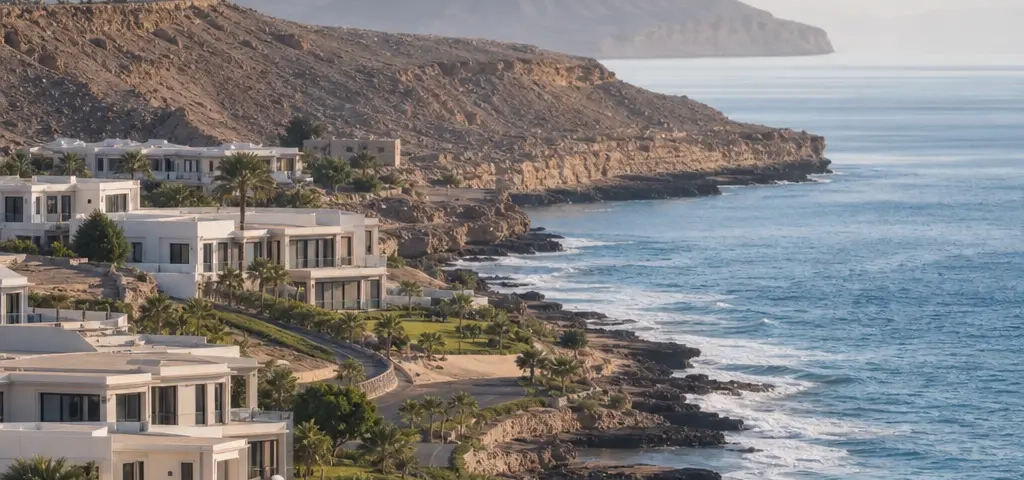
Muscat Hills And Aida In Muscat Compared Through Golf Community Homes And Coastal Lifestyle Real Estate

Muscat Hills in Muscat: Community Guide and How It Compares with AIDA

At a glance

Muscat Hills remains one of Muscat’s most established golf-led communities, with current asking prices in visible 2025–2026 listings ranging from about OMR 49,000 for a 49 sq m studio to OMR 379,496 for a 258 sq m villa. AIDA, by contrast, is a much larger new master-planned coastal destination in Yiti with a reported investment value of USD 4 billion and a 4.5 million sq m footprint, so the choice comes down to central-city convenience versus a newer resort-scale lifestyle.

In 2026, Muscat buyers are comparing two very different propositions. Muscat Hills offers a built, golf-oriented address close to the airport and established urban districts. AIDA positions itself as a large-scale freehold coastal development in Yiti with branded hospitality, a golf club and a broader long-term master plan. For expats and overseas buyers, the comparison matters because Oman’s legal framework, pricing, commute patterns and resale strategy all differ by location and project structure. For a wider view of the city, see our guide to Muscat areas and prices.

We see Muscat Hills as the more mature urban-golf option, while AIDA is the higher-conviction lifestyle play for buyers who want a destination community rather than a city-adjacent neighbourhood. Many buyers first benchmark against Al Mouj Muscat, the established seafront district in the capital, before shortlisting newer stock. If you are comparing current Muscat stock with newer branded inventory such as Marriott Golf Residences or cliffside villas in Aida Oceana Villas, the key is to compare not just ticket price, but also master plan depth, ownership format and exit profile.

Worth knowing

By the end of March 2026, Oman’s total real estate trading value had reached OMR 678.1 million, up 18.4% year on year, while sale contracts totaled OMR 304.9 million across 15,895 transactions. Buyers entering Muscat in 2026 are doing so in a rising market, not a distressed one.

What Muscat Hills is today

Muscat Hills is known primarily as a golf community in Muscat with apartments, villas and some commercial stock. In live 2025–2026 listings, asking prices show a broad range: a 49 sq m studio at OMR 49,000, a 117 sq m two-bedroom apartment at OMR 154,118, a 250 sq m villa at OMR 240,000, a 258 sq m villa at OMR 379,496, and a 378 sq m corner villa at OMR 350,000. That gives buyers a useful market band rather than a single headline number.

Where it sits in the city

The main attraction is location. Muscat Hills is positioned within the capital’s urban fabric and close to Muscat International Airport, which makes it practical for executives, GCC commuters and families who need fast access to business districts, schools and travel connections. In our view, that centrality is the project’s strongest advantage over Yiti-based resort communities.

What the current pricing tells us

Based on visible 2025–2026 asking data, Muscat Hills apartments are currently trading around OMR 1,000 per sq m at the entry level for a 49 sq m studio priced at OMR 49,000, and around OMR 1,317 per sq m for a 117 sq m two-bedroom unit priced at OMR 154,118. Villa pricing in the same snapshot runs around OMR 960 per sq m for a 250 sq m villa at OMR 240,000, around OMR 1,356 per sq m for a 258 sq m villa at OMR 350,000, and about OMR 1,471 per sq m for a 258 sq m villa at OMR 379,496. These are asking prices, but they are still useful for comparing entry points.

Commercial stock also appears in the community. Recent listings show offices at OMR 50,000 for 50 sq m, OMR 54,600 for 39 sq m, OMR 77,000 for 81 sq m and OMR 147,000 for 147 sq m. That signals mixed-use activity, but residential buyers should separate office-market liquidity from residential resale conditions.

Watch out for

Muscat Hills market evidence in 2026 is largely listing-based rather than fully transparent closed-deal data. That means buyers should treat OMR per sq m figures as asking-price benchmarks and verify title status, service structure and recent comparable sales before committing.

Muscat Hills vs AIDA: the practical comparison

AIDA is not simply another neighbourhood in Muscat. DarGlobal and OMRAN presented it as a large mixed-use destination in Yiti, with an investment value of about USD 4 billion, planned over roughly 8 to 10 years, and covering 4.5 million sq m in more recent company reporting. Construction updates also indicate handover for The Great Escape apartments and AIDA Phase 1 villas is targeted for Q3 2028. That places AIDA in a very different stage of the lifecycle from Muscat Hills.

Parameter
Muscat Hills
AIDA
Project stage
Established community
Existing resale market with visible 2025–2026 listings.
Large-scale new master plan
Launched in 2022, under construction, phased delivery through the second half of the decade.
Price visibility
OMR 49,000–379,496 in current listings
Studios, apartments, villas and offices show a wide ticket-size spread.
Product-led pricing by release
More relevant to compare by branded collection, such as The Great Escape 2 or villa phases, rather than by generic district averages.
Setting
Urban golf community
Better for airport access and day-to-day commuting.
Clifftop coastal destination in Yiti
Better for sea views, resort positioning and lifestyle-led second-home demand.
Scale
Neighbourhood scale
More limited in long-term placemaking depth.
4.5 million sq m
Much broader master plan with golf, hospitality and multiple residential formats.
Buyer profile
City-based owner-occupiers and practical investors
Often prioritise access, established stock and lower entry tickets.
Lifestyle buyers and long-horizon investors
Often prioritise branded positioning, capital appreciation and destination appeal.

Freehold and foreign ownership

This is one of the most important decision points. For the full picture, see our overview of what foreigners can buy in Oman. Oman historically limited most foreign ownership to integrated tourism complexes, and that remains a core route for overseas buyers. More recently, reforms also opened certain ownership outside ITCs above OMR 250,000, while residency through investment now runs through the relaunched Golden Residency programme, which sets a single qualifying threshold from OMR 200,000 for a renewable ten-year permit. Owners of a built ITC home can also consider the two-year property-owner visa. In June 2026, Oman further amended foreign residency rules to ease procedures for property owners and investors, with the changes published in Official Gazette No. 1653 on June 21, 2026. In practice, buyers should still verify whether a specific Muscat Hills unit is in an ownership structure suitable for their nationality and intended residency outcome, while AIDA’s positioning is more directly aligned with the freehold resort model.

Which community fits which buyer

When clients ask us which area is “better,” the honest answer is that Muscat Hills and AIDA serve different use cases. We would not compare them as substitutes in the same way we might compare two towers in the same district.

✈️
Frequent traveler or executive
Entry pricing from OMR 49,000
Muscat Hills works better if airport access and city convenience matter more than a resort setting. We would shortlist it for buyers who expect regular travel and want a ready urban address.
🌊
Lifestyle-led second-home buyer
AIDA scale: 4.5 million sq m
AIDA is more compelling if the brief includes sea views, branded amenities and a destination feel. Buyers looking at Trump Cliff Villas are usually prioritising experience and long-term positioning over urban convenience.
📈
Investor focused on resale strategy
Market trading value up 18.4% in Q1 2026
Muscat Hills gives more immediate resale comparables, while AIDA offers earlier-cycle upside if delivery and placemaking continue on schedule. The right choice depends on whether you value current evidence or future re-rating potential.

Lifestyle, commute and market context

Muscat as a city remains a strong relocation market by regional standards. Numbeo’s current 2026 reading for Muscat shows a Quality of Life Index of 182.05, a Safety Index of 81.38, a Cost of Living Index of 46.91 and a Property Price to Income Ratio of 6.29. For many expats, that combination supports the case for owner-occupation, especially when compared with higher-cost GCC cities.

We have seen this in practice. One expat buyer we advised started by looking only at central Muscat addresses because school runs and airport access were non-negotiable; Muscat Hills stayed on the list for exactly that reason. Another overseas buyer was less concerned about commute time and more focused on holding a branded freehold asset in a resort environment, which made AIDA the more natural fit.

Our assessment

If you want a golf community inside the city with visible resale benchmarks, Muscat Hills is easier to underwrite today. If you want a larger lifestyle ecosystem with a coastal identity, branded hospitality and a broader placemaking story, AIDA is the stronger strategic comparison. Neither is universally better. The decision should follow your holding period, residency plan, budget in OMR, and whether you are buying for daily use or long-term capital appreciation. For the income side, see our guide to yields and taxes on Oman property.

Bottom line

Muscat Hills is best understood as a practical, established Muscat golf community with a current visible pricing band from OMR 49,000 to OMR 379,496 across different product types. AIDA is a newer and much larger Yiti destination backed by DarGlobal and OMRAN, with a reported USD 4 billion development value, 4.5 million sq m scale, and Q3 2028 handover target for early residential phases. For buyers comparing the two in 2026, the real question is not which name is stronger, but which ownership model fits your life in Oman.

Another established community worth weighing alongside this one is Muscat Bay, a boutique coastal address near Bandar Jissah.

Related reading: what road and airport capacity mean for coastal Muscat pricing

For the wider category this community belongs to, see our guide to low rise communities in Muscat.

Sources
  • DarGlobal
  • Times of Oman
  • National Centre for Statistics and Information
  • Numbeo
  • OpenSooq

Market note: This article is for informational purposes only and should not be treated as legal, tax or investment advice. Pricing, eligibility, residency rules and unit availability can change; buyers should confirm current terms and documentation before making a reservation or purchase decision.

Considering Oman real estate? Explore the flagship Aida Oceana project in Muscat →

FAQ: Muscat Hills in Muscat and its comparison with AIDA

Is Muscat Hills a good area to buy property in Muscat in 2026?

It can be a practical option for buyers who want an established golf community with visible resale comparables. Current 2025–2026 asking prices seen in listings range from about OMR 49,000 for a 49 sq m studio to OMR 379,496 for a 258 sq m villa, which gives a clearer pricing baseline than many newer areas.

What is the difference between Muscat Hills and AIDA?

Muscat Hills is an existing urban golf community in Muscat, while AIDA is a larger master-planned coastal destination in Yiti. DarGlobal has described AIDA at about USD 4 billion in value and 4.5 million sq m in scale, with early phase handovers targeted for Q3 2028.

Can foreigners buy in Muscat Hills and AIDA?

Foreign ownership in Oman depends on the project structure and legal classification of the specific asset. ITC-style projects remain the clearest route for overseas buyers, while rules introduced in 2022 also opened some ownership outside ITCs above OMR 250,000. Residency through investment is a separate track: the relaunched Golden Residency programme sets a single threshold from OMR 200,000 for a renewable ten-year permit. Buyers should verify eligibility for each unit before purchase.

Is Muscat Hills closer to the airport than AIDA?

Yes, Muscat Hills is generally considered the more city-central option and is closer to Muscat International Airport. AIDA is in Yiti, which suits buyers prioritising a coastal resort environment over daily urban convenience.

What are average asking prices per square meter in Muscat Hills?

Based on visible 2025–2026 listings, apartment asking prices are roughly around OMR 1,000–1,317 per sq m, while villa asking prices in the same snapshot run around OMR 960–1,471 per sq m depending on size, condition and position.

Related reading: once the community is chosen, the next decision is the format — compare penthouses and luxury villas in Muscat.

Coastal Yiti District In Oman With Modern Residences Overlooking The Sea

Yiti, Oman: Why the District Attracts Global Investors

At a glance

Yiti stands out because it combines a legally accessible ownership structure for foreign buyers with large-scale master-planned development on Muscat’s coastline. In 2026, Oman’s real estate trading value reached OMR678.1 million by the end of March, up 18.4% year on year, while Yiti is being shaped by multi-billion-asset developers and branded projects that are unusual for one emerging coastal district.

By the end of March 2026, Oman’s real estate trading value had reached OMR678.1 million, up 18.4% from OMR572.7 million a year earlier. That matters for Yiti because international capital rarely moves into a new coastal district without clear evidence of market depth, legal structure, and long-term infrastructure delivery. Yiti now has all three.

We see Yiti as one of the few locations in Oman where lifestyle demand, tourism policy, and foreign-buyer accessibility overlap in a way global investors can actually underwrite. The area sits close enough to Muscat to benefit from airport access and city demand, but far enough to offer a distinct coastal masterplan story. Within this corridor, projects linked to OMRAN Group, Dar Global, Diamond Developers, and Trump-branded hospitality have moved Yiti from a scenic location to an investable one.

For buyers comparing Oman with Dubai, Ras Al Khaimah, or selected Saudi coastal schemes, the appeal is not only branding. It is the combination of entry pricing, lower urban density, and the freehold-style ownership route available inside Integrated Tourism Complexes. That framework is a core reason foreign investors keep Yiti on their shortlist. The full map of these zones is in our list of ITC freehold zones in Oman.

Worth knowing

Under Oman’s Integrated Tourism Complex law, non-Omani individuals and companies can own land or built units for accommodation or investment inside licensed ITCs, and a non-Omani owner may be granted residency for themselves and first-degree relatives.

Why Yiti is no longer a fringe location

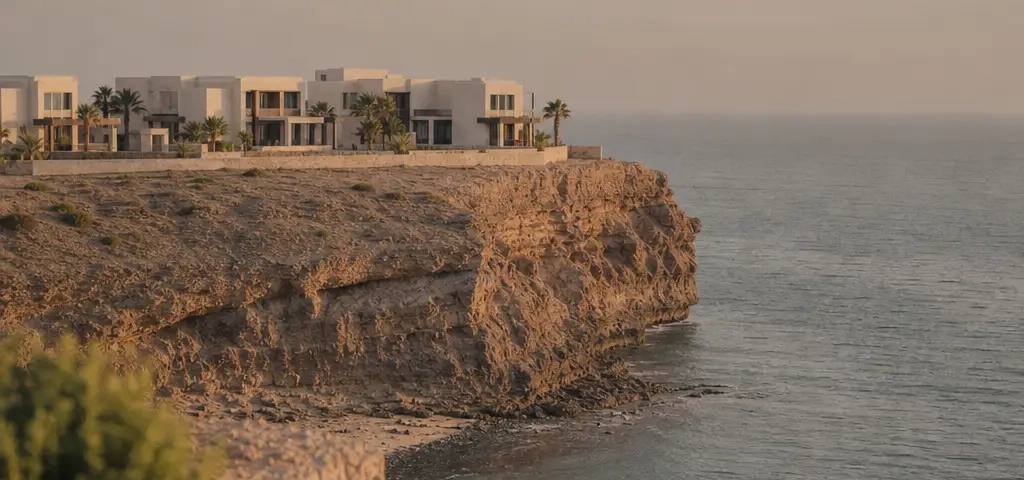
Yiti’s investment case starts with scale. Official project materials describe AIDA by DarGlobal as a master development on a cliffside site around 100 metres above the Sea of Oman, while Dar Global has described the wider project at 4.3–4.4 million square metres depending on project-stage disclosures. That is not boutique stock. It is district-scale development with room for villas, apartments, hospitality, leisure, and golf-led real estate.

The second anchor is neighbouring sustainable urban development. Marriott Golf Residences and other branded inventory in the AIDA area benefit from the same broader positioning that has also brought The Sustainable City – Yiti, a collaboration between OMRAN Group and Diamond Developers, into the district conversation. Investors tend to notice this kind of clustering because one major project reduces execution risk for another.

We also think access matters more than many first-time buyers assume. Oman’s airports handled 14,939,209 passengers in 2025, up 2.8% year on year, and traffic reached 1,452,911 passengers by the end of January 2026, up 8.8% from January 2025. For an investor assessing second-home demand or future resale strategy, that kind of connectivity trend supports the broader Muscat coastal story rather than Yiti in isolation.

Yiti vs established Muscat locations

Parameter
Yiti
Established Muscat districts
Development stage
Early-to-mid growth cycle
Large masterplans are still being delivered, which can support capital appreciation if execution stays on track.
Mature urban cycle
Better price discovery, but less scope for district-wide repricing from a low base.
Foreign ownership route
Clear inside ITCs
International buyers can own in licensed Integrated Tourism Complexes under the 2006 framework.
More location-dependent
Foreign access is strongest in designated projects rather than across standard residential stock.
Pricing benchmark
Project-led premium
Branded and coastal stock is priced above city averages, but investors are buying a masterplan and resort context.
City average guide
Muscat apartment buying averages around OMR1,023 per sq m in the city centre and OMR598 outside the centre as of June 2026.
Rental and exit logic
Lifestyle plus tourism demand
Best suited to buyers targeting affluent end-users, second-home demand, and future resale to international buyers.
Broader local demand
Usually easier to benchmark against conventional city rentals and owner-occupier demand.
Infrastructure narrative
Destination-building
Investment case depends on phased delivery of hospitality, golf, roads, and amenities.
Already functioning
Less execution risk, but fewer catalysts from brand-new district creation.

The practical takeaway is simple. If an investor wants immediate conventional urban comparables, central Muscat is easier to model. If the goal is to enter a coastal growth story before full maturity, Yiti is more compelling. A useful contrast is Jebel Sifah, a ready marina resort near Muscat.

Watch out for

In Oman’s ITC framework, a buyer who acquires land rather than a finished unit is generally required to develop or use it within 4 years of registration, with a possible extension of up to 2 additional years if approved. That makes finished residences simpler for many overseas investors than undeveloped plots.

What global investors actually like about the numbers

1. Oman’s macro backdrop is more stable than many assume

According to the IMF, Oman’s economy grew 1.6% in 2024, while nonhydrocarbon growth reached 3.5% year on year in the first half of 2025. Inflation stayed low at 0.9% during January–October 2025, and government debt stood at 36.1% of GDP by September 2025. For real estate buyers, that combination matters because resort-led property stories are easier to finance and resell in stable macro conditions.

2. Tourism is supporting the residential story

Tourism’s direct contribution to Oman’s GDP reached about OMR1.135 billion in 2025, with total tourism output at OMR2.284 billion and tourism consumption at OMR1.177 billion. Classified hotel guests rose 6.1% year on year to 242,106 by the end of January 2026. We view that as important support for Yiti because branded residential markets perform better when the surrounding destination is attracting higher-spending visitors.

3. Muscat pricing still looks moderate in a regional context

As of June 2026, Numbeo data put average apartment purchase prices in Muscat at OMR1,023.33 per sq m in the city centre and OMR597.89 per sq m outside the centre. The same dataset showed a 20-year fixed mortgage reference around 5.25%. Those are citywide benchmarks rather than Yiti-specific quotes, but they help global buyers understand why Oman is often viewed as a lower-entry alternative to prime UAE coastal markets.

On income returns, Muscat’s gross rental yields in 2026 were listed around 5.5% in city-centre locations and 5.8% outside the centre. Coastal branded stock in Yiti should not be modelled as a plain-vanilla city rental, but these benchmarks still help investors compare holding costs and potential income scenarios.

Which names are shaping Yiti’s credibility

Serious investors follow institutions before they follow brochures. In Yiti, five names matter most: OMRAN Group, Dar Global, Diamond Developers, The Trump Organization, and Marriott-linked branded residential hospitality within the wider AIDA ecosystem.

OMRAN is the state-backed tourism development arm that gives projects in this corridor more strategic weight. Dar Global brings cross-border sales reach and branded development experience. Diamond Developers adds credibility on the sustainability side through The Sustainable City – Yiti. The Trump-branded hospitality and golf component gives the district visibility with international buyers who may not have followed Oman otherwise. In practice, this is why buyers often start with branded products such as The Great Escape 2 or higher-end villa stock like Trump Cliff Villas when they want exposure to the Yiti story. Whether that brand premium actually pays off is the question we weigh in Marriott and Trump branded residences.

We have seen this pattern before in emerging resort districts: global capital rarely arrives because of one tower or one beach. It arrives when multiple recognised developers create enough momentum to make the area legible to overseas buyers.

Who Yiti suits best

🌍
International lifestyle investor
5.5–5.8% Muscat gross yield benchmark
Best for buyers who want a second-home asset in a coastal ITC with a realistic income reference, while accepting that branded resort stock follows a different pricing model than standard city apartments.
📈
Capital growth buyer
18.4% rise in Oman real estate trading value by March 2026
Suitable for investors targeting resale strategy through district maturation, brand visibility, and future infrastructure delivery rather than immediate maximum yield.
🏡
Expat family planning partial relocation
Residency route available in ITCs
A practical fit for households that want legal ownership, residence-linked optionality, and a lower-density coastal environment within reach of Muscat.

From our perspective, Yiti is not the right choice for every buyer. If you want fully mature urban infrastructure on day one, parts of central Muscat or Al Mouj may feel more predictable. But if you are comfortable buying into a district that is still repricing as infrastructure arrives, Yiti offers a clearer growth narrative.

We would also add one personal note from client discussions. Buyers relocating from Europe often tell us Yiti feels easier to justify than denser Gulf alternatives because the value proposition is not only rental income. It is space, sea frontage, residency flexibility, and a branded masterplan within an emerging market that still has room to move.

Related reading: which road and transport upgrades could shape values around Yiti

Sources
  • National Centre for Statistics and Information
  • International Monetary Fund
  • OMRAN Group
  • Dar Global
  • Ministry of Housing and Urban Planning
  • Oman Airports
  • Numbeo
  • Global Property Guide
  • National Bank of Oman

This article is for informational purposes only and does not constitute investment, legal, or tax advice. Project pricing, fees, financing terms, and residency rules can change, so buyers should verify current terms with the developer, the relevant Omani authorities, and an independent adviser before reserving a property.

Considering property in Oman? Discover the flagship Aida Oceana project in Muscat →

Yiti Oman FAQ

Can foreigners buy property in Yiti, Oman?

Yes, foreign buyers can own property in licensed Integrated Tourism Complexes in Oman. Under Royal Decree 12/2006, non-Omani individuals and companies may own land or built units in these projects for accommodation or investment.

Is Yiti a good area for property investment in Oman?

Yiti appeals to investors because it combines coastal masterplans, international branding, and legal foreign ownership access. The broader Oman market also showed momentum, with real estate trading value reaching OMR678.1 million by the end of March 2026, up 18.4% year on year.

What rental yield can investors expect near Muscat in 2026?

Citywide Muscat benchmarks in 2026 showed gross rental yields around 5.5% in city-centre locations and 5.8% outside the centre. Yiti’s branded coastal stock should be assessed separately, but these figures give a useful market reference.

How much does property cost in Muscat compared with emerging areas like Yiti?

As of June 2026, average apartment prices in Muscat were about OMR1,023.33 per sq m in the city centre and OMR597.89 per sq m outside the centre. Yiti pricing depends on project type, view, brand, and delivery stage, so buyers usually compare it against premium coastal rather than average city stock.

Does buying property in an Oman ITC help with residency?

Oman’s ITC law states that a non-Omani owner of qualifying residential or investment property may be granted residency for themselves and first-degree relatives, subject to the applicable procedures and conditions.

Related reading: for what the district actually offers at the top end, see our comparison of penthouses and luxury villas in Muscat.

Real Estate Agent Advising An International Buyer On Property Options In Muscat, Oman

Real Estate Agents in Oman: How to Choose and What to Check

At a glance

In 2026, the most important filter is not brand size but regulatory and market fit: foreign buyers still pay a 3% property registration fee, agent commissions in resale deals commonly sit around 2%–3%, and foreign freehold ownership remains concentrated in Integrated Tourism Complexes. A strong agent in Oman should prove licensing, explain costs line by line, and show transaction evidence in the exact micro-market you plan to buy into.

As of 2026, Oman’s brokerage market is getting more formal. The Ministry of Housing and Urban Planning offers first-time brokerage registration and annual renewal through its e-services, while the wider legal framework has also been updated by Royal Decree 79/2025 and the new Real Estate Registry Law, Royal Decree 56/2026, effective from 18 May 2026. That matters for buyers because a polished sales pitch is no longer enough. You need an agent who can work inside a more documented, more transparent transaction environment.

For expatriates and international investors, the issue is even more specific. Foreign freehold ownership in Oman is generally tied to Integrated Tourism Complexes, or ITCs, rather than the wider residential market. For the full picture of what foreigners can buy in Oman, start there. So when we assess real estate agents oman, we compare them on licensing, deal structure, local product knowledge, and how clearly they handle legal limits, fees, and resale expectations.

Worth knowing

MoHUP’s brokerage registration service requires approved brokerage companies to be Omani entities, and the published service criteria include at least 80% Omanisation among brokers. If an agent cannot clearly explain who holds the licence and under which company they operate, that is a practical red flag.

Why agent selection matters more in Oman than in larger markets

Oman is not a volume-led brokerage market like Dubai. Micro-markets behave differently, and legal access depends on buyer status. In practical terms, an agent selling in Al Mouj, Muscat Hills, Hawana Salalah, Muscat Bay, or AIDA is not automatically qualified to advise on every buyer profile or every ownership structure.

We see this clearly in the numbers. For foreign buyers, the standard property transfer and registration fee is still 3% of the property value in 2026. Total closing costs are often estimated at roughly 5%–7% for cash buyers and 6%–9% where financing is involved, once legal, admin, and agency costs are included. On a property priced at OMR 100,000, that can mean about OMR 5,300 in additional acquisition costs in a typical worked example. An agent who glosses over this is not protecting your downside.

There is also a market context issue. Savills reported Oman’s total value of real estate trading at OMR 698.3 million at the end of Q1 2025, down 4.7% year on year, even as the number of sale contracts rose 6.2%. That combination usually points to a market where product selection, pricing discipline, and negotiation matter more than generic optimism.

Names buyers are likely to encounter

In the Oman market, real buyers often come across a mix of developer-linked sales teams, regional advisers, and local brokerages. Real names in circulation include Savills Oman, Red Skyline Real Estate, Danat Al Ghad, Vista Real Estate, SkyLand, Tawy Estates, and MK Muscat. On the developer side, the most relevant names for premium stock and ITC-led buying include Dar Global, OMRAN Group, Al Mouj Muscat, and Muriya/Orascom.

If your target is Yiti, the discussion should quickly become project-specific. In that case, the agent should be able to explain the positioning of Aida Oceana Villas, the wider AIDA master plan, and adjacent branded components such as Trump Golf Villas and Marriott Golf Residences without drifting into unrelated districts.

What to compare when choosing real estate agents in Oman

Parameter
Independent local broker
Developer-linked sales team
Licence and structure
Check the operating company
Best when the firm can show MoHUP-linked brokerage status and identify the licensed entity behind the individual agent.
Check the sales mandate
Usually clearer on new-launch inventory, but still ask who holds the brokerage or sales authorization.
Market coverage
Broader resale search
Often better for comparing Al Mouj, Muscat Hills, Muscat Bay, and Yiti side by side.
Deeper product detail
Usually stronger on one scheme’s payment plan, handover timeline, and unit stack.
Fee visibility
Typical resale commission: 2%–3%
Ask who pays it, whether VAT applies, and whether the fee changes for off-market sourcing.
Often built into developer sales flow
Buyer may not see a separate line item, but should still ask how compensation works.
Best use case
Comparison-driven buyer
Useful if you want realistic resale evidence, rent comparables, and negotiation support.
New-build buyer
Useful if you are prioritising launch inventory, phased payment terms, and direct developer paperwork.

In our view, buyers should compare agents on four hard questions.

1. Can they prove legal and transactional competence?

A credible agent should know the difference between freehold in an ITC, leasehold structures, developer inventory, and resale stock. If you are at the buying stage, our guide on buying property in Oman as a foreigner walks through the process. They should also understand that the new Real Estate Registry Law took effect on 18 May 2026 and forms part of a broader reform cycle after Royal Decree 79/2025. If they cannot explain how title, registration, and transfer mechanics work in Oman, stop there.

2. Can they break down full costs?

Ask for a written estimate. In 2026, foreign buyers still commonly budget 3% for registration, around 2%–3% for resale brokerage where applicable, and legal or admin costs on top. VAT at 5% can apply to the first supply of new residential property. A serious adviser should tell you which charges are fixed, which are conditional, and which vary by asset and counterparty.

3. Do they know your exact submarket?

Al Mouj, Muscat Hills, Yiti, and Muscat Bay are not interchangeable. Savills’ Q2 2025 benchmarks put a 2-bedroom apartment rent in Al Mouj at about OMR 709 per month and a 4-bedroom villa at around OMR 1,400 per month. Those figures do not automatically transfer to another district. If an agent uses one location’s rent or liquidity profile to sell another, that is weak advice.

4. Can they show evidence, not anecdotes?

We recommend asking for at least 3 recent comparable transactions or asking-price adjustments in the same project or neighbouring cluster. In a market where occupancy was estimated around 85.2% in 2024 and roughly 5,500 additional homes were expected by end-2025, oversimplified scarcity narratives are not enough.

Watch out for

If an agent markets a property to a non-Omani buyer as straightforward freehold outside an ITC framework, treat that as a verification point immediately. In Oman, foreign freehold access is primarily tied to Integrated Tourism Complexes under the established ITC regime.

Checks that separate a reliable agent from a lead generator

We use a simple test. A reliable agent is willing to lose a sale rather than hide a constraint. A weak one keeps the conversation vague until the booking stage.

Ask for these documents and answers upfront

First, ask which company holds the brokerage authority. Second, ask whether the property is resale, off-plan, or completed developer stock. Third, ask for the exact ownership form. Fourth, ask for a cost sheet in OMR, not just USD marketing language. Fifth, ask whether the quoted price includes service or community charges where relevant.

From experience, buyers who skip this step usually pay in time rather than in cash. We have seen expatriate buyers spend weeks comparing “similar” homes, only to discover that one unit was not available for their ownership profile or had a different fee stack. In Oman, that is not a small detail. It changes the full investment case.

Questions about resale strategy

If you are buying for medium-term capital preservation or resale strategy, ask how long comparable units typically stay on the market, which buyer pool dominates the area, and whether price discovery is driven by local end-users, GCC buyers, or international investors. In AIDA and Yiti, the right agent should be able to discuss buyer demand in the context of a 4.3 million sq m master plan under Dar Global and OMRAN, rather than treating the area like generic Muscat stock.

Who should use which kind of agent?

🌍
International first-time buyer
Budget extra 5%–7%
You need an agent who can explain the 3% registration fee, likely 2%–3% resale commission, and ITC ownership rules in plain language before you reserve.
📈
Yield-focused investor
Check rent comps monthly
Use a broker with live comparables, not brochure projections. In established zones such as Al Mouj, benchmark rents like OMR 709 for 2-bed units help frame realistic assumptions.
🏡
Lifestyle buyer in Yiti
Project scale: 4.3m sq m
Choose an adviser who knows the AIDA pipeline, branded components, handover phasing, and the difference between sea-view, golf-front, and community inventory.

For many buyers, the right answer is not “the biggest agency” but “the most relevant specialist.” If you are comparing lifestyle-led branded stock in Yiti, a project-focused adviser will usually outperform a general Muscat broker. If you are screening resale units across several ITCs, an independent comparison-led agent can be more useful.

Our practical conclusion is simple: choose the agent who is most transparent about legal structure, fee stack, and submarket evidence. In Oman, confidence should come from documentation and comparables, not from polished marketing language.

Disclaimer: This article is for general market education only and is not legal, tax, or investment advice. Rules, fees, VAT treatment, and developer terms can change, so buyers should confirm current details with MoHUP, qualified legal counsel, and the relevant project sales team before committing funds.

Sources
  • Ministry of Housing and Urban Planning
  • Gov.om
  • Dentons
  • Ministry of Heritage and Tourism
  • Savills Research
  • Expat Focus
  • Dar Global
  • OMRAN Group

Want to buy property in Oman? Explore our freehold residences →

FAQ: real estate agents oman

How do I verify a real estate agent in Oman?

Ask which company holds the brokerage authority, request the agent’s operating company details, and confirm that the firm works under the Ministry of Housing and Urban Planning framework. In 2026, MoHUP still provides brokerage registration and annual renewal services through its e-services.

What commission do real estate agents charge in Oman?

In resale transactions, agent commission in Oman commonly sits around 2%–3% of the purchase price. The exact payer can vary by deal structure, so ask for a written breakdown before reserving a property.

Can foreigners buy any property in Oman through an agent?

No. Foreign freehold ownership in Oman is generally tied to Integrated Tourism Complexes rather than the wider housing market. A competent agent should explain whether the asset is in an ITC and whether your buyer profile is eligible.

What fees should a buyer expect besides the property price in Oman?

Foreign buyers typically budget a 3% transfer and registration fee in 2026. Total closing costs are often around 5%–7% for cash purchases and 6%–9% with financing, depending on legal, admin, and brokerage costs.

Should I use a developer sales team or an independent broker in Oman?

Use a developer-linked team if you want direct access to launch inventory, payment plans, and project documentation. Use an independent broker if you want to compare multiple communities, resale options, and pricing evidence across Muscat submarkets.

Related reading: once the agent checks out, the next question is who is actually building — see our guide to assessing real estate developers in Oman.

Investor Reviewing Oman Residency Visa By Property Options In Muscat

Oman Investment Visa: How to Get Residency by Buying Property

At a glance

As of 2026, the central property-linked route is the Golden Residency framework, launched on 31 August 2025, which sets a single qualifying threshold from OMR 200,000 for a renewable 10-year residency; the published government service fee for the 10-year investor visa is OMR 500. For property buyers, the practical question is not only budget, but whether the asset sits in a freehold structure that supports the residency path you plan to use.

In Oman, residency through real estate is possible, but the rules are more technical than many buyers expect. For the wider picture of what foreigners can buy in Oman, start with our market overview. Official guidance on Gov.om shows an investor visa service with a fee of OMR 500 for 10 years, and a minimum applicant age of 21. The national Golden Residency programme, launched on 31 August 2025, sets a single qualifying threshold from OMR 200,000 for a renewable 10-year residency. For buyers using property as the route, the safest reading is simple: confirm the ownership structure first, then confirm the residency class that the property supports.

How Oman residency by property works in 2026

There are effectively two layers investors need to understand. The first is the investor visa service listed by the Omani government. Gov.om states that the application is submitted through the Ministry of Commerce, Industry and Investment Promotion after the investment conditions are met, and the service is processed digitally with a stated time of about 10 minutes for the service transaction itself. The second layer is the national Golden Residency platform, which by 2026 functions as the central portal for applying, tracking and renewing investor residency.

Worth knowing

Official government guidance lists the investor visa fee at OMR 500 for 10 years, while the post-2025 Golden Residency framework sets a single qualifying threshold from OMR 200,000 for a renewable 10-year residency.

For foreign buyers, the critical legal distinction is freehold in designated Integrated Tourism Complexes (ITCs) versus property outside those zones. We explain how freehold ownership works in detail. Oman’s foreign ownership framework allows non-Omanis to hold freehold title in approved ITCs, and that is why projects such as Al Mouj Muscat, AIDA, Jebel Sifah, Hawana Salalah and Muscat Bay matter in this discussion. If the property is not in a structure that legally supports foreign title and residency processing, the visa strategy can fail even if the buyer has enough capital.

What changed after 2025

Before the Golden Residency relaunch, market guidance around Oman often referenced the older thresholds of OMR 250,000 for a 5-year card and OMR 500,000 for a 10-year card. In September 2025, the Ministry of Commerce, Industry and Investment Promotion publicly described the new Golden Residency framework with a single qualifying threshold from OMR 200,000 for a renewable 10-year residency, alongside family inclusion. In practice, this means investors should not rely on pre-2025 sales language without checking which regime a developer or agent is referring to. For the programme specifically, see the Oman Golden Visa explained.

Watch out for

Many online articles still quote the legacy tiers of OMR 250,000 and OMR 500,000, but the current framework sets a single threshold from OMR 200,000. Before paying a reservation fee, ask which exact residency route applies to your purchase and confirm the figure on the Invest Oman portal.

Property requirements: what investors should verify before applying

Buying any apartment in Oman is not the same as buying a residency-eligible asset. For foreign nationals, the strongest route is a property with clear title eligibility in an ITC or another structure explicitly accepted by the authorities. We recommend checking four items before signing a sale and purchase agreement.

1. Title deed status

Al Mouj Muscat states that buyers can apply for residency-related visas and that even purchasers whose Mulkeiya title deed has not yet been issued may be entitled to proceed under that project’s process. That is useful, but investors should still ask for the developer’s documented visa pathway, not just verbal confirmation.

2. Minimum investment threshold

The current framework sets a single qualifying threshold from OMR 200,000 for a renewable 10-year residency. If your property budget is near the line, a shortfall of even OMR 1,000–5,000 can matter if the authority assesses market value conservatively.

3. Family inclusion

Project-level guidance at Al Mouj notes that a buyer can apply for the same visa type for first-degree relatives. The 2025 Golden Residency launch materials also describe family inclusion without age or number restrictions under that broader programme framework. Investors relocating with a spouse, children or dependent parents should confirm which dependants are covered under the chosen route. What this means for a spouse and children is set out in our guide to family residency in Oman after a home purchase.

At AIDA, buyers often compare branded and lifestyle-led stock because residency is only one part of the decision. If your priority is long-hold ownership with a premium location in Yiti, it is worth reviewing options such as Marriott Golf Residences, Trump Cliff Villas and Aida Oceana Villas alongside the visa pathway.

Step-by-step: how to get Oman residency visa by property

Although each case is document-specific, the working process is straightforward when the property is correctly structured.

Step 1: Choose a qualifying asset

Start with a freehold asset in a recognised project where the developer, broker and legal adviser can explain the residency basis in writing. In Oman, names that come up repeatedly in the foreign-buyer segment include OMRAN Group, Al Mouj Muscat, Muriya, Muscat Bay and Dar Global.

Step 2: Complete the purchase file

You will typically need the signed contract, proof of payment, passport copy and property documents supporting ownership or entitlement. The Gov.om service page lists the passport and digital personal photo as required documents at the visa stage.

Step 3: Submit through the official channel

Gov.om states that the investor visa application must be submitted through the Ministry of Commerce, Industry and Investment Promotion after meeting the investment conditions. The Residence Portal then allows investors to upload, manage and track the application digitally.

Step 4: Pay the government fee

The published fee is OMR 500 for a 10-year investor visa. Those are official service fees, not the property purchase amount.

Step 5: Plan the hold period realistically

We would not approach Oman with a short resale strategy. In our assessment, this market suits buyers who want a combination of residence rights, second-home use and medium-term capital preservation. For the numbers, see our guide to yields, taxes and ROI in Oman. If you expect a rapid exit in 12–18 months, the visa benefit may not justify total acquisition and holding costs.

Who this route suits best

🏡
Lifestyle investor
Budget from OMR 200,000+
Best for buyers who want a second home in Muscat and a long-stay option. We see the strongest fit when residency is part of a broader relocation or family mobility plan.
🌍
Expat family
10-year residency route
Useful if you want self-sponsored residence rather than relying entirely on employer sponsorship. Family inclusion is one of the main advantages of the programme structure.
📈
Long-hold buyer
Age 21+ applicant
This route fits investors prepared to hold a quality asset for several years. For many buyers, location quality matters more than chasing the lowest entry price.

From what we see in buyer behaviour, the strongest candidates are not purely yield-driven. They usually want three things at once: legal ownership, a base in Oman, and flexibility for family members. One expat client scenario we often discuss is a Gulf-based professional who has rented for years, wants more control over housing costs, and prefers a self-sponsored plan over employment-linked residency. Another is an international investor who already holds UAE property and wants a lower-density second base in Oman with a more lifestyle-led setting.

Common mistakes to avoid

The first mistake is assuming that all foreign-purchase property in Oman leads to the same residence outcome. It does not. The second is confusing a developer’s marketing statement with official approval conditions. The third is focusing only on the threshold amount and ignoring transfer structure, title timing, and dependants.

We also recommend avoiding assets that are hard to explain on paper. If the sales package cannot clearly state whether the unit is freehold, whether the title deed is issued or issuable, and which residency route applies in 2026, treat that as a risk signal. In the AIDA ecosystem, many investors prefer master-planned stock precisely because the ownership narrative is easier to audit, whether they are comparing Fairway Villas or larger-format branded inventory.

Disclaimer: Residency eligibility depends on the final property structure, document package, regulatory interpretation and the investor’s personal status at the time of application. Rules can change, and developers or brokers should not replace advice from the relevant Omani authorities and a qualified legal adviser.

Related reading: what to check during a property viewing trip in Muscat and Yiti.

A property purchase is not the only qualifying route: see when residency through an Omani company makes more sense.

After the first approval, the work shifts to the renewal cycle — what property owners should prepare in advance.

Ownership can also act as a fallback if work status shifts — see the checks to run around an employer change.

Sources
  • Gov.om
  • Ministry of Commerce, Industry and Investment Promotion
  • Golden Residency Program – Sultanate of Oman
  • Al Mouj Muscat
  • Ministry of Housing and Urban Planning

Interested in Oman real estate investment? Download the Aida Oceana project brochure →

Oman residency visa property FAQ

What is the minimum property investment for Oman residency in 2026?

The Golden Residency framework (launched 31 August 2025) sets a single qualifying threshold from OMR 200,000 (about USD 520,000) for a renewable 10-year residency. Confirm the figure in force on the Invest Oman portal at the time of application. Note that the OMR 500 figure is a government service fee, not an investment threshold.

Can foreigners get Oman residency by buying any property?

No. The safer route is a property structure that supports foreign ownership and residency processing, typically in an Integrated Tourism Complex or another officially accepted format. Buyers should confirm title status and visa eligibility in writing before paying.

How much is the Oman investor visa fee?

According to Gov.om, the official investor visa fee is OMR 500 for a 10-year visa. This is a government service fee and does not include the property purchase price or transaction costs.

Can family members be included in Oman residency by property?

Yes, family inclusion is a core part of the investor-residency framework. Al Mouj Muscat states that first-degree relatives can apply for the same visa type, and the 2025 Golden Residency communication also highlights family inclusion.

What documents are needed for Oman residency by property?

At the visa stage, Gov.om lists the applicant passport and digital personal photo. In practice, property-linked cases also require the purchase documents, proof of payment, and records that establish the investor’s ownership or eligibility.

How to get an oman residency visa property route in 2026

Choose a residency-eligible property

Shortlist a property with a clear foreign ownership structure, ideally freehold in an Integrated Tourism Complex or another format accepted for investor residency. Ask the developer or broker to confirm the residency basis in writing.

Verify the investment threshold

Check which residency regime applies to your case. The current framework sets a single qualifying threshold from OMR 200,000; confirm the current figure on the Invest Oman portal.

Collect the property and identity documents

Prepare the sale and purchase agreement, proof of payment, passport copy, digital personal photo, and any title deed or ownership entitlement documents required by the project and authorities.

Submit through the official investor residency channel

Apply through the Ministry of Commerce, Industry and Investment Promotion after meeting the investment conditions, then use the official Residence Portal to upload documents and track the case.

Pay the government visa fee and monitor approval

Gov.om lists the fee at OMR 500 for a 10-year investor visa. After submission, monitor status updates in the digital portal and respond quickly if additional documents are requested.

Investor Comparing Oman And Uae Real Estate Markets In A Modern Gulf Residential Setting

Oman vs UAE: Which Real Estate Market Makes More Sense for an Investor in 2026?

At a glance

In 2026, the Oman real estate market offers a lower entry point and a simpler ownership story for buyers targeting freehold stock in approved projects, while the UAE offers far greater liquidity and transaction volume. Dubai alone recorded AED 252 billion in Q1 2026 real estate transactions, but Oman can look more efficient for investors who prioritize price per square meter, residency linkage, and a medium-term hold in projects such as Yiti.

For most international buyers, this is not really a question of which country is “better.” It is a question of what kind of portfolio role you want property to play. If you want depth, turnover, and a larger secondary market, the UAE is ahead on scale. If you want a smaller-ticket freehold purchase with clearer supply discipline and a more lifestyle-led ownership case, the oman real estate market deserves a closer look.

Worth knowing

Dubai posted 60,303 real estate transactions and 718,160 total real estate procedures in Q1 2026, while foreign investment value reached AED 148.35 billion. That tells you a lot about liquidity, but not automatically about entry pricing or competition for yield.

Market scale: the UAE wins on volume, Oman is a smaller but more selective market

The clearest difference is scale. Dubai’s total real estate transactions reached AED 252 billion in Q1 2026, up 31% year on year, according to Dubai Land Department. The same quarter also saw 57,744 investment transactions worth AED 173 billion, with foreign investment value at AED 148.35 billion. For an investor, that means more frequent price discovery, deeper resale activity, and more exit routes than you typically get in Oman.

Oman’s market is moving in a different way. The Ministry of Housing and Urban Planning reported more than 35,000 visitors at the 2026 Oman Real Estate & Design Expo, while signed partnership and development agreements at the event exceeded OMR 443 million. Another agreement in Sultan Haitham City alone was announced at more than OMR 320 million. That is not Dubai-style transaction depth, but it does show institutional capital going into planned communities and off-plan delivery.

We see this as the core split. The UAE is a large, highly traded market. Oman is still narrower, but it can be easier to underwrite because competition is lower and the number of relevant freehold zones for foreign buyers is more contained.

What this means for investors

If you are building a portfolio that depends on fast resale, the UAE has the advantage. If you are buying one or two assets and care more about holding quality than trading frequency, Oman becomes more competitive. In our view, Yiti fits this second category better than a speculative short-hold strategy in oversupplied locations.

Parameter
Oman
UAE
Market depth
Smaller market
More selective pipeline and fewer foreign-buy zones
AED 252bn in Q1 2026
Very high transaction activity in Dubai alone
Foreign capital visibility
Project-led
Capital is concentrated in designated developments and integrated communities
AED 148.35bn foreign investment in Q1 2026
Large and visible international buyer base
Resale liquidity
Moderate
Works better for medium-term holding periods
High
Broader secondary market and faster price discovery
Competition
Lower
Fewer institutional-scale players in the residential freehold niche
Higher
More active investors, brokers, and off-plan launches

Entry price and affordability: Oman is usually easier on capital outlay

For many private investors, price per square meter decides the shortlist before yield does. In Muscat, Numbeo’s May 2026 user-contributed market data shows apartment asking prices around OMR 1,023 per sq m in the city centre, with a reported range of OMR 600–1,220 per sq m. Outside the centre, the average was about OMR 598 per sq m, with a range of OMR 459–688.5 per sq m.

Dubai is a different pricing universe. Dubai Land Department’s 2024 annual report put the average residential apartment price at AED 19,138 per sq m in 2024, versus AED 14,617 per sq m for villas. Q1 2026 data from CBRE then showed residential sales prices still up 9.1% year on year, even as the market moderated.

That gap matters. It means an investor with the same equity cheque can typically buy more square meters in Oman, and often in lower-density, lifestyle-oriented stock. This is one reason we think projects tied to destination planning in Yiti can appeal to buyers who would be priced into smaller, more competitive units in Dubai.

Within AIDA, that usually means comparing formats rather than just countries. A buyer focused on branded positioning may look at Marriott Golf Residences, while a villa-led buyer may compare Aida Oceana Villas or Halo Villas against UAE villa communities on a pure cost-per-key basis. For the branded-positioning side of that call, see how the two flagship brands stack up in Trump and Marriott hotel residences compared.

Yield, growth, and the real trade-off between income and liquidity

Investors often assume the UAE automatically produces the best returns because the market is larger. That is too simple. In Dubai, the issue in 2026 is not lack of demand. It is whether yields keep pace as prices stay elevated. CBRE noted that rental growth in Dubai softened to 4.1% year on year in Q1 2026, with apartment rents up 4.9% and villa rents flat, while sales price growth moderated to 9.1%. CBRE also flagged that if yields compress too far, sales pricing may need to adjust.

Oman’s data is less centralized, but the current market consensus is that gross residential yields in Muscat often sit around the 5–7% range for standard residential stock, with some market commentary placing broader Oman residential yields at roughly 6–10% depending on location and unit type. We treat the lower part of that range as more investable for underwriting. The key point is that Oman can remain competitive on net efficiency because entry pricing is lower. For the full breakdown, see yields, taxes and ROI in Oman.

Watch out for

The UAE’s larger market does not remove timing risk. Dubai delivered more than 35,000 units in 2025, and CBRE expects a much larger 2026 completion pipeline, even if delays slow actual handovers. For yield-focused buyers, supply timing matters as much as headline demand.

We have seen this in buyer behavior. A first-time GCC investor may prefer Dubai for comfort and resale optionality. A second buyer, especially one planning partial personal use, often starts to value lower entry cost, less crowding, and stronger lifestyle differentiation. That is where Oman starts to make more sense.

Our practical view on returns

We would frame the comparison this way: the UAE is generally better for investors who value liquidity and institutional depth; Oman is often better for investors seeking a lower capital threshold, a residency-linked ownership angle, and more room for capital appreciation from destination maturation rather than pure market momentum.

Rules, fees, and residency: both markets are accessible, but the structure is different

In Oman, foreign buyers traditionally purchase in Integrated Tourism Complexes, where ownership rights are linked to approved projects. The long-standing framework for ITCs allows non-Omani buyers to own qualifying property and obtain residence rights tied to ownership. The government service page states that a residence visa for a property owner in an integrated tourism complex is valid for 2 years. Oman has also rolled out a long-term residency framework with 5-year and 10-year renewable permits through its investor residence platform.

In the UAE, the headline threshold is more familiar: the official UAE Golden Visa page states that real estate investors can qualify with property valued at a minimum of AED 2 million, and the investor category tied to property offers a 10-year renewable residence permit through the Dubai Land Department pathway.

On transaction fees, Dubai is more transparent and more expensive on entry. The Dubai legislation schedule shows a standard registration fee of 4% of the sale contract value. In Oman, transaction and registration costs are typically lighter at the consumer level, although exact project-level fee stacks vary and should always be checked before signing.

There is another legal point in Oman worth noting. Royal Decree 56/2026 introduced the new Real Estate Registry Law in May 2026, with the explicit goal of improving transparency, digital procedures, and transaction reliability. For international investors, that is a meaningful institutional upgrade, alongside the wider Oman Vision 2040 planning agenda.

Who should choose Oman, and who should choose the UAE?

The best answer depends on how you plan to use the asset. We would not push every investor toward Oman, and we would not assume the UAE is automatically the rational choice just because it is larger.

🌍
Capital-preservation buyer
Lower entry from about OMR 600–1,220 per sq m in Muscat data
Best suited to buyers who want a lower-ticket freehold entry and are comfortable with a 5–7 year hold rather than fast resale turnover.
📈
Liquidity-focused investor
AED 252bn Dubai transactions in Q1 2026
Better matched to investors who need a deep secondary market, frequent comps, and multiple exit routes across off-plan and completed stock.
🏖️
Lifestyle plus investment buyer
2-year property-owner residence visa in Oman ITCs
This profile often prefers Oman, especially destination communities where personal use, sea views, and long-term ownership all matter alongside return metrics.

From our side, we see Oman as especially relevant for investors who are priced out of premium UAE districts or no longer like the risk-reward on compressed Dubai yields. In that scenario, destination-led projects in Yiti can work as an alternative allocation rather than a substitute for Dubai.

If you are comparing options inside AIDA, villa buyers may start with Trump Cliff Villas or Fairway Villas, while hospitality-oriented buyers may find the surrounding ecosystem around Trump International Hotel more relevant to their thesis on resale strategy and destination positioning.

Bottom line: choose the UAE if you want scale, liquidity, and a mature international trading market. Choose Oman if you want lower entry pricing, residency-linked ownership in approved developments, and a market where lifestyle value still has room to reprice as infrastructure and branded communities mature.

We have also seen this play out in real conversations. One expat client we advised had budgeted for a small Dubai apartment but shifted to Oman after realizing the same capital could buy a far more distinctive asset with stronger personal-use appeal. Another buyer stayed with the UAE because resale speed was the top priority. Both decisions were rational because the objective was different.

Choosing the market is only the first step — the next is sizing it: what share of a portfolio a Muscat home should take.

Sources
  • Dubai Land Department
  • CBRE
  • Ministry of Housing and Urban Planning Oman
  • The Official Portal of the UAE Government
  • Numbeo
  • Government of Oman

Disclaimer: This article is for general market information only and does not constitute legal, tax, or investment advice. Pricing, yields, fees, and residency rules should be verified against the latest official documents and project-specific terms before any reservation or purchase.

Interested in Oman property investment? Download the Aida Oceana project brochure →

If the fee and tax comparison is the deciding factor for you, we break down real estate tax in Oman in a dedicated guide.

FAQ: Oman vs UAE real estate for investors

Is Oman or the UAE better for property investment in 2026?

It depends on the objective. The UAE offers far higher liquidity and transaction depth: Dubai reached AED 252 billion in Q1 2026 real estate transactions. Oman is usually stronger on lower entry pricing and can work better for medium-term buyers focused on lifestyle-led freehold assets in approved projects.

Can foreigners buy freehold property in Oman?

Yes, foreign buyers can own property in approved developments, especially Integrated Tourism Complexes. Ownership in these zones has long been linked to residency eligibility, and Oman also offers 5-year and 10-year renewable investor residency routes through its official residence platform.

What is the minimum property investment for a UAE Golden Visa?

The official UAE threshold for a real-estate-based Golden Visa is property valued at AED 2 million or more. The residence permit is renewable for 10 years under the investor route.

Are property prices lower in Oman than in Dubai?

In most comparable cases, yes. Muscat market data in May 2026 showed apartment prices around OMR 1,023 per sq m in the city centre, versus Dubai’s average residential apartment price of AED 19,138 per sq m in Dubai Land Department’s 2024 market report.

Does Dubai still offer strong rental yields in 2026?

Dubai remains active, but the market is moderating. CBRE reported rental growth of 4.1% year on year in Q1 2026 and warned that if yields compress too far, sales prices may need to adjust. That means investors should underwrite carefully rather than rely on recent momentum alone.

Foreign Buyer Reviewing Modern Coastal Property In Muscat, Oman

Property for Sale in Oman: What Foreign Buyers Need to Know

At a glance

Foreign buyers can legally own property in Oman, but in practice the safest route is to buy in approved Integrated Tourism Complexes. In Q1 2026, Oman’s total property transaction value reached OMR 678 million, up 18.4% year on year, while typical buyer costs still need careful planning because transfer fees can reach about 3% and VAT may apply to first supply of new units.

By the end of Q1 2026, Oman’s real estate market had recorded OMR 678 million in transactions, an 18.4% increase from the same period in 2025. For overseas buyers, that matters because it signals liquidity, active deal flow, and a market that is still relatively early compared with Dubai or Abu Dhabi.

If you are searching for property for sale Oman, the first point is legal, not cosmetic: foreigners are generally allowed to own homes in licensed Integrated Tourism Complexes, while ownership outside those zones is restricted and certain areas remain prohibited for non-Omanis. For the full map, see our overview of what foreigners can buy in Oman.

We see many international buyers focus too early on price per square metre and too late on title, registration, and exit strategy. In Oman, that order should be reversed. The market can work well for expatriates and foreign investors, but only when the asset, ownership structure, and fees are clear before reservation.

Worth knowing

As of early 2026, foreign buyers should usually budget around 5–7% of the purchase price for total transaction costs when registration, legal support, and mortgage-related fees are included.

Where foreigners can buy property in Oman

The legal framework is straightforward once you separate freehold-style ownership in designated projects from restricted land outside them. The Integrated Tourism Complex law allows Omani and non-Omani individuals and companies to own land or built units in licensed ITCs for residence or investment.

That is why most foreign demand concentrates in master-planned locations such as Al Mouj Muscat, Muscat Hills, and AIDA in Yiti, rather than in ordinary residential districts with less certainty on foreign ownership. For a district-by-district view, see Muscat areas, prices and how to buy. In practical terms, buyers usually compare branded or master-planned communities where documentation, common-area management, and resale positioning are easier to assess.

At the same time, Oman still restricts non-Omani ownership in several sensitive areas. The 2018 law bars foreign ownership in governorates including Musandam, Al Buraimi, Al Dhahirah, Al Wusta, and most of Dhofar except Salalah, as well as islands, strategic mountains, some heritage zones, and agricultural land across the Sultanate.

For most overseas buyers, this means one simple filter: verify first that the project is in a licensed foreign-ownership structure, then move to pricing and lifestyle.

What this means in real life

When we review deals for clients, the first documents we check are the title pathway, developer approvals, community rules, and the exact ownership form offered in the SPA. A scenic location alone is not enough. A seafront unit with weak legal clarity is a riskier purchase than a slightly less dramatic unit in a better-documented scheme.

Watch out for

Do not assume every property advertised in Muscat is open to non-Omani ownership. Outside approved structures, foreign ownership can be restricted even if the marketing language sounds international.

What foreign buyers pay: entry budget, taxes, and fees

Costs in Oman are lighter than in many mature markets, but they are not negligible. As of early 2026, the government transfer and registration fee for foreign buyers is commonly cited at about 3% of property value. VAT at 5% may apply to the first supply of new residential property, while resale homes are generally not subject to that 5% VAT charge.

If you finance the purchase, mortgage processing fees are typically around 0.5% of the loan amount, or sometimes a fixed charge in the OMR 500–2,000 range, depending on the lender and the case complexity. Foreign-buyer loan-to-value ratios are often around 60–70%, versus roughly 80–90% for Omani nationals.

That creates a realistic budgeting framework:

  • Transfer and registration: about 3%
  • VAT on first supply of new residential units: 5% where applicable
  • Mortgage processing: around 0.5% of loan amount, or OMR 500–2,000
  • Total buyer-side transaction budget: often 5–7%

One advantage is the absence of annual residential property tax in the usual sense. As of 2026, Oman does not levy recurring annual property tax on residential or commercial real estate.

For an expat buyer, that changes the hold-cost equation. You may pay more attention to service charges, furnishing, insurance, and financing than to annual municipal tax leakage.

How the Oman market looks in 2026

Macro conditions matter because Oman is not a pure speculative market. The capital region remains the country’s main economic anchor: Greater Muscat accounts for 49% of national GDP, 36% of population, and 50% of the national workforce, according to the government’s Live Oman platform.

That concentration helps explain why Muscat dominates serious foreign-buyer search activity. It is where infrastructure, international schools, airport access, and white-collar employment are strongest. Muscat International Airport also connects Oman directly to more than 60 countries, which supports the expatriate ownership case.

Market data from Q1 2026 also shows pricing resilience in the upper residential segment. In Al Mouj, average monthly rent for a two-bedroom apartment reached OMR 710, up 3% year on year, while four-bedroom villas averaged OMR 1,770, up 2%. Muscat Hills four-bedroom villas averaged OMR 1,200 after 25% growth.

Those are rental figures, not sale prices, but they help buyers estimate demand depth and holding potential. In current market listings, Al Mouj apartment prices are commonly marketed around OMR 2,200–3,000 per sq m, with indicative gross yields in the 4–6% range.

For buyers who want a newer branded coastal story, Yiti is now part of that conversation. AIDA has become one of the names international buyers track alongside Al Mouj, Muscat Hills, and Sultan Haitham City as Oman’s planned communities evolve. If you are comparing master-planned stock, projects such as Marriott Golf Residences, Halo Villas, and Aida Oceana Villas show the kind of product foreign purchasers usually shortlist first.

Real names to know in the market

Foreign buyers should recognize the main market names, not just generic agent language. The projects and institutions most relevant in 2026 include Al Mouj Muscat, Muscat Hills, AIDA, Sultan Haitham City, and Greater Muscat planning under the Ministry of Housing and Urban Planning. On the developer and operator side, buyers frequently encounter Dar Global, OMRAN, and branded hospitality-linked communities.

Residency, ownership strategy, and exit planning

Some foreign buyers enter Oman for lifestyle, others for capital preservation, and some for a medium-term resale strategy. The residency angle can matter. According to Invest Oman, a qualifying investment from RO 200,000 in property can support a renewable 10-year residency route under the Golden Residency framework. A lower-cost alternative is the two-year owner visa for ITC property buyers.

That threshold puts Oman in a specific category: it is not a low-ticket residency play, but it sits below several regional programmes and can suit buyers who want a second base in the GCC and a fully owned real estate asset in a regulated environment.

We would still separate two buyer profiles. If your priority is personal use, focus on community quality, access roads, service charge predictability, and handover standards. If your priority is return, focus on tenant depth, resale comparables, and how quickly similar stock trades in projects with established management.

From experience, expatriate buyers often underestimate the importance of exit. We have seen buyers purchase a beautiful home that works for holidays but is hard to resell because the unit type is too niche. In Oman, mainstream layouts in strong managed communities tend to be easier to rent and easier to resell than highly customized homes.

🏖️
Lifestyle buyer
RO 200,000 residency threshold
This profile values legal clarity, sea views, and long-stay usability. Approved ownership zones matter more than chasing the lowest entry price.
📈
Yield-focused investor
4–6% gross yield references
This buyer should compare mature communities such as Al Mouj with newer master-planned stock in Yiti and weigh income stability against future appreciation potential.
🌍
Expat relocating to Muscat
60–70% typical foreign LTV
Financing may be available, but cash planning remains essential. We recommend stress-testing fees, furnishing, and community charges before signing.

What we recommend before you reserve

Before paying a booking fee, confirm six items: the project’s foreign-ownership eligibility, the exact title structure, the full payment plan, service charges, VAT treatment, and registration costs. Also ask who manages the community after handover and whether resale approvals or NOCs are required. It also helps to know how to choose a real estate agent in Oman.

In 2026, Oman is improving transaction infrastructure as well. The Ministry of Housing and Urban Planning announced the Real Estate Registry Law under Royal Decree 56/2026 as part of a broader push to modernize registration, accelerate procedures, and improve transaction reliability. That is positive for market trust, but buyers still need project-level due diligence on each purchase.

Our view is simple: Oman can be a rational market for foreign ownership when you stay inside approved structures, budget buyer costs properly, and buy an asset that can serve both personal use and future resale.

Related reading: what to check in a developer payment schedule before reserving

Related reading: how to confirm a developer and project are properly licensed

Sources
  • Ministry of Housing and Urban Planning
  • Invest Oman
  • Global Property Guide

Disclaimer: This article is for general market information only and is not legal, tax, or mortgage advice. Rules, fees, and financing terms can change by project, lender, and buyer nationality, so always confirm the current position with the developer, your bank, and a qualified Oman-based adviser before committing.

Want to buy property in Oman? Discover our freehold residences →

FAQ: Property for Sale in Oman for Foreign Buyers

Can foreigners buy property in Oman?

Yes, foreigners can buy property in Oman in approved Integrated Tourism Complexes. Outside those structures, ownership rules are more restrictive, and some areas remain prohibited for non-Omanis.

What are the main buying costs for foreign property buyers in Oman?

As of early 2026, foreign buyers typically budget about 3% for transfer and registration, plus 5% VAT on the first supply of new residential property where applicable. If financing is used, mortgage processing fees are often around 0.5% of the loan amount or OMR 500 to OMR 2,000.

Is there annual property tax in Oman?

Oman does not generally impose annual property tax on residential or commercial real estate. Buyers should still budget for service charges, insurance, utilities, and any financing-related costs.

Can I get residency in Oman by buying property?

Invest Oman states that a property investment from RO 200,000 can qualify for a renewable 10-year investor residency route, subject to the current program rules and application requirements.

Can foreigners get a mortgage in Oman?

Yes, some banks in Oman lend to foreign buyers. Typical loan-to-value ratios are often around 60% to 70% for non-Omani borrowers, lower than the levels commonly available to Omani nationals.

Related reading: knowing what you may buy is only half the work — the other half is knowing who builds it. See our guide to real estate developers in Oman.

Modern Apartment Living In A Muscat Residential District

Apartment for Rent in Muscat: Area Prices and Practical Tips

At a glance

In 2026, Muscat rents still vary sharply by district. Current market data shows a 1-bedroom apartment averages about OMR 245 per month in central locations and OMR 162 outside the centre, while premium districts such as Al Mouj sit far above that range. For most expats, the right rental decision in Muscat comes down to three variables: commute, furnishing level, and whether bills are included.

As of February 2026, market-tracked rents in Muscat average OMR 245.14 per month for a 1-bedroom apartment in the city centre and OMR 161.90 outside the centre. For 3-bedroom units, the averages rise to OMR 482.27 in central areas and OMR 298.00 outside the centre. That gap matters if you are comparing a lifestyle address with a practical daily commute. We see the same pattern across live listings in Al Mouj, Azaiba, and Madinat Sultan Qaboos, where asking rents can differ by several hundred rials for similar bedroom counts depending on finish, furnishing, and building age.

If you are searching for an apartment for rent in Muscat, the city is easier to navigate when you group areas by use case rather than by map position. For the full process, see our guide on how to rent an apartment in Muscat. Al Mouj suits tenants who want a master-planned coastal lifestyle and are willing to pay for it. Madinat Sultan Qaboos and Qurum tend to attract families and long-stay professionals. Azaiba, Ghubrah, Bosher, and Al Khuwair usually offer a broader mid-market selection with better price flexibility.

Worth knowing

Open market listings in June 2026 show a clear spread: 2-bedroom apartments in Al Mouj are advertised around OMR 700-800 per month, while live listings in Azaiba and Madinat Sultan Qaboos commonly sit closer to OMR 250-380 for standard mid-market stock.

What apartment rents look like in Muscat in 2026

The broad Muscat benchmark is useful as a starting point. Numbeo’s Muscat dataset, last updated on 17 February 2026, shows these citywide averages:

  • 1-bedroom in city centre: OMR 245.14 per month
  • 1-bedroom outside centre: OMR 161.90 per month
  • 3-bedroom in city centre: OMR 482.27 per month
  • 3-bedroom outside centre: OMR 298.00 per month
  • Gross rental yield benchmark: 5.45% in central areas and 5.97% outside central areas
  • Price-to-rent ratio: 18.36 in central areas and 16.76 outside central areas

These numbers are not district-specific leases, but they give a credible market frame. In practical terms, most apartment hunters in Muscat are seeing three working bands in 2026: roughly OMR 120-220 for basic studios and compact 1-bedroom units in outer districts, about OMR 230-380 for mid-market 1- to 2-bedroom units in established expat areas, and OMR 700-850 or more for branded or premium coastal stock in Al Mouj. Renters weighing rent against buying can also compare whether to purchase a studio or one-bedroom apartment in Muscat.

That premium segment also overlaps with the ownership market. Buyers who start by renting often compare lease costs with long-term ownership in branded or golf-linked communities such as Marriott Golf Residences or villa-led options like Aida Oceana Villas.

Rent by district: where the biggest differences appear

Al Mouj: premium coastal living

Open listings crawled in June 2026 show 2-bedroom Al Mouj apartments around OMR 700-800 per month, with a 3-bedroom furnished unit advertised at OMR 850. This is one of Muscat’s clearest premium rental submarkets. Tenants here usually pay for walkability, marina access, newer stock, and a more integrated community format.

Azaiba: broad mid-market inventory

Azaiba is one of the easiest districts for price discovery because listing volume is deep. Recent listings show studios from about OMR 120-250, 1-bedroom units around OMR 230-300, 2-bedroom apartments around OMR 340-380, and some furnished or upgraded stock reaching OMR 500-600. For expats who need airport access or a central east-west commute, Azaiba often balances budget and convenience better than premium coastal areas.

Madinat Sultan Qaboos: stable family-oriented demand

In June 2026, live listings in Madinat Sultan Qaboos showed 2-bedroom apartments at OMR 250, furnished 2-bedroom stock at OMR 340, and 1-bedroom listings at OMR 325-350. This area tends to appeal to professionals who want an established residential setting rather than a resort-style address.

Qurum, Al Khuwair, Ghubrah, and Bosher

These districts remain core expat search zones because they sit close to offices, schools, retail, and major roads. OpenSooq snapshots also show short-stay and serviced inventory in Qurum, Al Khuwair, Ghubrah, and Bosher, with some daily rents from OMR 7-36 and monthly furnished offers around OMR 90-150 at the lower end, though those are not directly comparable to full-size annual residential leases. We recommend treating hotel apartments and room-based listings separately from standard family apartments.

Watch out for

A headline rent can be misleading in Muscat. Some lower-priced listings are for studios, room-based layouts, hotel apartments, or units with limited parking, older finishes, or utilities charged separately.

How expats can choose the right area

We usually advise clients to start with daily routine, not just headline rent. In Muscat, a cheaper apartment can become a poor deal if it adds 30-45 minutes of commuting each way, requires a car for every errand, or sits in a building with weak maintenance.

Best fit for single professionals

Azaiba, Al Khuwair, Ghubrah, and parts of Bosher usually make the shortlist. They offer more flexible monthly budgets, easier access to main roads, and a wider mix of furnished and unfurnished stock.

Best fit for families

Madinat Sultan Qaboos, Qurum, and selected parts of Bosher tend to work better for families because they combine residential feel with services. If budget allows, Al Mouj offers a more planned environment, but pricing is materially higher.

Best fit for lifestyle-led renters

If your priority is sea access, leisure facilities, and a more resort-like setting, Al Mouj is the obvious reference point in Muscat. Renters who later move into ownership often compare that model with planned branded communities and lifestyle-driven stock such as The Great Escape 2.

💼
Single professional
OMR 160-300/month entry band
Best suited to Azaiba, Al Khuwair, or Ghubrah if you want lower monthly outgoings and a practical commute.
👨‍👩‍👧
Family tenant
OMR 250-482+ typical range
MSQ, Qurum, and Bosher generally offer stronger long-stay fit, especially if schools and room count matter more than beach access.
🌊
Lifestyle-focused expat
OMR 700-850/month in Al Mouj
Works for tenants who value community amenities and newer stock, and accept a clear premium over Muscat’s broader market average.

Practical rental tips before you sign

Compare furnished and unfurnished properly

In Muscat, furnished stock can look efficient at first glance, but the premium can be meaningful. In Azaiba alone, June 2026 listings ranged from about OMR 140-160 for simpler studio options to OMR 500-600 for furnished and upgraded apartments. Always compare total monthly occupancy cost, not just base rent.

Ask what is included

Utilities, internet, municipal charges, parking, and maintenance are not always packaged the same way. Some room-based or serviced units include bills, while standard residential leases may not. We recommend asking for a written breakdown before paying any deposit.

Separate short-stay stock from residential stock

Daily offers in Bosher, Ghubrah, and Al Khuwair can be useful for a soft landing, but they should not be used as the main benchmark for annual leasing. A daily OMR 27 room or a weekly furnished unit serves a different tenant profile from a conventional 1- or 2-bedroom apartment.

Know the market context

Muscat’s wider ownership metrics also explain why rental pricing has stayed relatively disciplined. As of February 2026, average apartment sale pricing was about OMR 1,023 per sq m in central areas and OMR 597.89 per sq m outside the centre, with mortgage rates around 5.25% for a 20-year fixed benchmark. That helps explain why some long-stay residents eventually shift from renting to buying, especially in master-planned projects.

Our view: what makes a good rental decision in Muscat

We see good rental decisions in Muscat as a balance of area quality, building condition, and exit flexibility. A tenant paying OMR 250-350 in Madinat Sultan Qaboos or Azaiba may get stronger value than someone paying OMR 700-850 in Al Mouj unless the premium lifestyle is used daily. On the other hand, for some expats, that premium is justified if it cuts travel time and improves family routine.

We have also seen a common pattern among relocators: they arrive on a short lease, learn which district fits their week-to-week life, and only then decide whether to continue renting or move into ownership. If buying is on the table, see Muscat areas, prices and how to buy. That is one reason rental research in Muscat is more useful when tied to long-term housing strategy, not just a 12-month contract.

Sources: Ministry of Housing and Urban Planning (Oman); Numbeo; OpenSooq.

Disclaimer: Rental listings and asking prices in Muscat can change quickly by building, furnishing level, and season. This article is for general market guidance and should not be treated as legal or financial advice.

Found the right area? Lease registration, parking permits and local requests can then be handled online — see our guide to Muscat municipal services online.

Many expats who start with renting eventually choose ownership. Here is what ownership looks like at Aida Oceana →

FAQ: apartment for rent in Muscat

How much is a 1 bedroom apartment for rent in Muscat in 2026?

As of February 2026, citywide tracked averages put a 1-bedroom apartment at about OMR 245 per month in central Muscat and OMR 162 outside the centre. Actual district pricing varies by furnishing, building quality, and whether bills are included.

Which area is best for expats renting an apartment in Muscat?

For many expats, Azaiba, Al Khuwair, Ghubrah, Bosher, Madinat Sultan Qaboos, and Al Mouj are the main search zones. Azaiba and Al Khuwair are often more budget-conscious, while Al Mouj sits in the premium bracket.

Is Al Mouj more expensive than other Muscat rental areas?

Yes. June 2026 listings showed 2-bedroom apartments in Al Mouj around OMR 700-800 per month, well above many mid-market listings in Azaiba or Madinat Sultan Qaboos, where common asking ranges were closer to OMR 250-380.

What should tenants check before signing a lease in Muscat?

Check whether the apartment is furnished or unfurnished, whether utilities and internet are included, how parking works, and whether the quoted price is for a full residential unit rather than a room or serviced apartment.

Is it better to rent or buy in Muscat?

That depends on your timeline. Many newcomers rent first to learn the city. Long-stay residents sometimes move into ownership later, especially when comparing annual rent with apartment sale prices of around OMR 598 per sq m outside central areas and about OMR 1,023 per sq m in central areas as of February 2026.

Muscat Real Estate Districts Compared For Buying Property In 2026

Muscat Oman Real Estate: Areas, Prices, and How to Buy in 2026

At a glance

In 2026, foreign buyers in Muscat can purchase freehold homes mainly in approved Integrated Tourism Complexes, with indicative pricing from about OMR 400–700 per sqm in Muscat Hills, OMR 650–1,100 per sqm in Muscat Bay, and OMR 2,200–3,600 per sqm in Al Mouj. For most international buyers, the real decision is not “Muscat or not”, but which district fits their budget, holding period, and resale strategy.

Foreign ownership in Oman still follows a clear legal boundary in 2026: non-Omanis are allowed to own land or built units in licensed Integrated Tourism Complexes under Royal Decree No. 12/2006, while Royal Decree No. 29/2018 restricts ownership in certain non-ITC areas. Our overview of what foreigners can buy in Oman sets out the wider picture. That makes area selection the first investment decision, not the last.

Which Muscat areas matter most in 2026?

For buyers using the search term muscat oman real estate, four areas come up repeatedly in real transactions and market comparisons: Al Mouj, Muscat Hills, Muscat Bay, and Yiti. These are not interchangeable. They sit at different price points, attract different tenant profiles, and carry different resale timelines.

Worth knowing

As of 2026, Al Mouj apartments are typically quoted at OMR 2,200–3,000 per sqm, waterfront villas at OMR 2,800–3,600+ per sqm, Muscat Hills apartments at OMR 400–700 per sqm, and Muscat Bay homes at OMR 650–1,100 per sqm.

Al Mouj: the most mature waterfront market

Al Mouj remains Muscat’s most established ITC and the city’s most liquid resale market. The community runs along 6.5 km of coastline and, according to market listings compiled in 2026, tends to show 4–6% gross yields and 80–85% typical occupancy in well-positioned stock. We see Al Mouj as the benchmark for buyers who care about exit liquidity, finished infrastructure, and predictable tenant demand rather than headline growth promises.

For buyers who want an established branded environment, comparable communities inside the AIDA ecosystem such as Marriott Golf Residences or larger-format homes like Trump Golf Villas are often evaluated against Al Mouj on price-per-sqm and resort positioning.

Muscat Hills: lower entry, easier maths

Muscat Hills sits at a more accessible entry level. Apartments start from about OMR 65,000, with quoted yields around 5–7%. Townhouses are reported from roughly OMR 140,000, while five-bedroom villas are generally in the OMR 250,000–300,000 range, with top stock near OMR 400,000. For budget-aware expat buyers, this is often where the numbers start to make sense. If you are weighing the smallest formats, compare whether to buy a studio or one-bedroom apartment in Muscat.

We would class Muscat Hills as a practical market: less prestige than Al Mouj, but easier entry, simpler rental targeting, and less capital tied up per unit. For a direct comparison, see how Muscat Hills compares with AIDA.

Muscat Bay and Yiti: lifestyle-led and appreciation-led

Muscat Bay generally trades around OMR 650–1,100 per sqm, while Yiti-related off-plan pricing in current market guides is often lower than Al Mouj and framed around future appreciation rather than immediate resale. In the AIDA/Yiti zone, villas are commonly cited at OMR 550–900 per sqm, with estimated gross yields around 7–9% for the strongest resort-style products.

That is where a project-led strategy matters. Buyers comparing clifftop or sea-oriented stock may naturally review options such as Halo Villas, Aida Oceana Villas, or Coastal Investment Villas against other Yiti and Muscat Bay alternatives. Buyers weighing a ready resort against an off-plan master plan can also read our Jebel Sifah vs Yiti comparison.

Parameter
Al Mouj
Yiti / AIDA
Price per sqm
OMR 2,200–3,600+
Premium waterfront pricing with a mature resale market
OMR 550–900
Lower entry point in an emerging clifftop destination
Market stage
Completed community
Best for buyers who want operational amenities today
Mainly off-plan growth story
Best for buyers comfortable with development timelines
Gross yield range
4–6%
More stable, but usually lower than newer resort-led stock
7–9% estimate
Higher upside assumptions, but with execution risk
Buyer profile
End-users, executives, conservative investors
Focus on liquidity and finished product
Growth-focused buyers and second-home owners
Focus on capital appreciation and resort positioning
Resale strategy
More active secondary market
Better visibility on comparable pricing
Longer hold usually needed
Resale depends on handover, branding, and market absorption

What do Muscat prices actually look like in 2026?

The headline mistake buyers make is treating Muscat as one pricing band. In reality, the gap between districts is wide. Third-party 2026 market guides put villa pricing in Muscat at roughly OMR 320 per sqm in Al Seeb up to about OMR 1,150 per sqm in Al Mouj, a spread of around 3.6x. In premium non-ITC coastal districts, Shatti Al Qurum is often quoted at about OMR 800–1,000 per sqm, but that does not automatically translate into foreign-buyer eligibility.

So when buyers ask us whether Muscat is “cheap” or “expensive,” the useful answer is: Muscat is segmented. The city includes mid-market golf communities, diplomatic coastal districts, and high-ticket resort freehold stock, all inside one metro area.

Worth knowing

Al Mouj has been reported as 30–40% more expensive than some alternative expat compounds in Muscat, which is why pricing alone should not drive area choice; liquidity and legal eligibility matter just as much.

How foreign buyers can buy property in Muscat in 2026

The buying process is more straightforward than many first-time investors expect, but it is stricter on legal location than in some Gulf markets. We cover it step by step in buying property in Oman as a foreigner. Non-Omani buyers should first confirm whether the unit sits inside a licensed ITC. Under the 2006 ITC ownership law, both Omani and non-Omani persons may own land or built units in such complexes for accommodation or investment. If you are buying a plot rather than a completed unit, note another key rule: undeveloped land in an ITC is expected to be developed or exploited within 4 years of registration, with a possible extension of up to 2 years.

Transaction costs to budget for

For foreign buyers, the main one-off government transfer and registration fee is typically around 3% of the property value. If you use an agent, market guidance in 2026 places commission at roughly 2–3%, although that is contractual rather than a universal statutory standard. Practical buyer-side acquisition costs are often framed around a total of 5–7% once registration, agency, and basic legal support are included.

For managed communities, annual maintenance is another line item. Broad market guides cite about OMR 4 per sqm annually as a rough baseline in some communities, while discussion around premium resorts shows higher service-charge ranges can apply depending on branding and amenities. Always ask for the current service-charge budget before signing a reservation.

Watch out for

Do not assume every attractive coastal district in Muscat is open to foreign freehold ownership. For non-Omani buyers, legal status comes first: confirm the project is inside an approved ITC before paying a booking deposit.

Residency angle in 2026

Residency rules have evolved, so buyers should use current official thresholds rather than older market talk. Oman’s current Golden Residency portal presents a long-term residency track and confirms property ownership in tourism zones as a qualifying route. The programme was relaunched in 2025 with a single qualifying threshold from OMR 200,000 for a renewable 10-year permit. In practice, we recommend buyers verify the threshold in force on the date of application, because this is an administrative area that can change faster than property law.

Which option suits which buyer?

🏖️
Lifestyle buyer
OMR 2,200–3,600+ per sqm
Best matched to Al Mouj or top-end beachfront stock. You pay more, but you buy into a finished location with stronger resale visibility and daily-use amenities.
📈
Growth-focused investor
7–9% projected gross yield
Yiti and AIDA-style products suit buyers who can hold through delivery and leasing ramp-up. This is closer to a medium-term appreciation play than an instant income strategy.
🧮
Value-first expat buyer
From OMR 65,000
Muscat Hills works for buyers who want a lower ticket size, a clearer rental thesis, and a simpler entry into Muscat ownership without Al Mouj pricing.

Our practical view on buying Muscat real estate in 2026

We see Muscat in 2026 as a selective market, not a broad boom. Hamptons’ H2 2025 outlook for H1 2026 describes the residential market as stable, with location-specific rental growth and prime lifestyle-led communities outperforming secondary stock. That fits what we would tell clients today: buy where management quality, buyer pool depth, and operating costs are visible.

In our experience, two buyer journeys are common. One expat household starts by comparing rent against ownership and realizes that a mid-market ITC apartment can be more rational over a multiyear stay. If you are weighing that, see our guide to renting an apartment in Muscat. Another buyer comes in for residency and capital preservation, then chooses a completed community over a cheaper off-plan unit because resale timing matters more than nominal entry price. Both approaches can work, but only if the area matches the objective.

Disclaimer: This article is for market information only and does not replace legal, tax, or financing advice. Residency thresholds, fees, and developer terms should be checked again at the point of reservation and transfer.

Related reading: how access improvements are changing the Yiti corridor

Want to buy property in Oman? Explore our freehold residences at Aida Oceana →

FAQ: Muscat Oman Real Estate in 2026

Can foreigners buy property in Muscat in 2026?

Yes, but mainly in approved Integrated Tourism Complexes. Royal Decree No. 12/2006 allows non-Omanis to own land or built units in licensed ITCs for accommodation or investment.

What is the price per square meter in Muscat in 2026?

Indicative 2026 ranges vary sharply by district: Muscat Hills apartments are around OMR 400–700 per sqm, Muscat Bay around OMR 650–1,100 per sqm, and Al Mouj apartments around OMR 2,200–3,000 per sqm, with Al Mouj waterfront villas reaching OMR 2,800–3,600+ per sqm.

Which Muscat area is best for rental yield?

In current market guides, Muscat Hills is often quoted at 5–7% gross yield, Al Mouj at 4–6%, and Yiti/AIDA-type resort stock at an estimated 7–9% in stronger scenarios. The best choice depends on whether you prioritize current income or future appreciation.

How much are buyer costs when purchasing property in Muscat?

A foreign buyer should usually budget about 5–7% on top of the purchase price in a standard transaction. The main government transfer and registration fee is commonly around 3%, and agent commission is often 2–3% where an agent is involved.

Can buying property in Muscat lead to residency in Oman?

Potentially yes. Oman’s Golden Residency portal confirms a 10-year residency route and lists property ownership in tourism zones as a qualifying path. Buyers should verify the exact investment threshold in force at the time of application, as official sources cite figures ranging from OMR 200,000 to OMR 500,000 depending on tier and route.

Related reading: after the district comes the developer — see what to verify in our guide to real estate developers in Oman.

Related reading: at the top of the market the choice narrows to two formats — see our comparison of penthouses and luxury villas in Muscat.

How to buy muscat oman real estate in 2026

Choose an eligible Muscat area first

Start by confirming whether the property is in an approved Integrated Tourism Complex such as Al Mouj, Muscat Hills, Muscat Bay, or Yiti/AIDA. For foreign buyers, legal eligibility is the first filter.

Compare price bands and holding strategy

Check whether you are buying into an established resale market or an off-plan growth story. In 2026, Al Mouj is typically the premium benchmark, while Muscat Hills and Yiti-style communities sit at lower entry points.

Review full acquisition costs

Add the transfer and registration fee, likely around 3% for a foreign buyer, then ask about agency commission, legal support, and annual maintenance or service charges before you reserve a unit.

Verify residency relevance if needed

If residency is part of the plan, check the current Golden Residency criteria on the official portal. Do not rely on older thresholds repeated in agent marketing.

Reserve, document, and transfer title

Once legal status, pricing, and fees are clear, proceed with reservation documents, sale contract review, and title transfer through the competent authority. Keep written confirmation of payment schedules, service charges, and handover terms.

Oman Real Estate Investment Scene With Premium Coastal Homes In Muscat

Real Estate Investment Oman: ROI, Taxes and the Numbers That Matter

At a glance

Muscat residential yields are typically quoted around 5.5%–6.8% gross in 2026, while Oman still offers no recurring annual residential property tax. For foreign buyers using approved freehold structures in Integrated Tourism Complexes, the investment case depends less on tax sheltering and more on entry price, holding costs, handover timing, and realistic net yield after fees.

In 2026, the most important fact for anyone looking at real estate investment Oman is simple: the market is attractive because total ownership friction remains relatively low, not because returns are automatic. Public and market data place gross residential yields in Muscat at about 5.45% in the city centre, 5.97% outside the centre, and around 6.8% on broader market estimates, depending on unit type and location. That is the starting point for any ROI model, not the finish line.

We also need to separate Oman into two investor realities. One is the wider market, where ownership rules differ by asset and location. Our overview of what foreigners can buy in Oman sets out where access applies. The other is approved freehold stock in Integrated Tourism Complexes, where non-Omanis can own property directly. For the mechanics, see how freehold ownership works. That is the legal framework behind projects such as Al Mouj Muscat, Muscat Hills, Hawana Salalah, and AIDA in Yiti. For a project-level comparison, see how Muscat Hills compares with AIDA. Within AIDA, products such as Marriott Golf Residences, Halo Villas, and Aida Oceana Villas fit the freehold, lifestyle-led segment international buyers usually target.

What ROI in Oman really means in 2026

Gross yield is the easiest number to quote and the easiest number to misuse. Global Property Guide explains gross rental yield as annual rent divided by purchase price before costs. In Muscat, public-facing yield references for 2026 cluster in the mid-single digits: 5.45% in central areas, 5.97% outside central areas, and roughly 6%–7% in broader market estimates depending on property size and submarket.

Worth knowing

A gross yield of 6% on a property priced at OMR 200,000 implies about OMR 12,000 in annual rent before service charges, maintenance, vacancy, management, and acquisition costs.

Gross yield vs net yield

For most investors, the useful spread is not 5% versus 7%. It is gross yield versus net cash yield after friction. Oman does not levy personal income tax on residential rental income under the current system for individual investors, and it does not impose a recurring annual residential property tax. That helps preserve net income. But net yield still moves lower once you factor in service charges, maintenance reserves, furnishing, leasing downtime, and agency fees.

In practice, we advise modelling three scenarios. A conservative case might haircut headline gross yield by 1.5–2.0 percentage points. A stabilized case may reduce it by around 1.0–1.5 points. A premium branded asset with stronger occupancy and resale appeal may defend pricing better, but the entry basis is also higher. That is why two units with the same 6% gross yield can deliver very different IRR outcomes over a 5-year hold.

Capital appreciation is location-specific

Price growth in Oman is not uniform. Muscat remains the country’s most liquid residential market, and Yiti has drawn attention because of master-planned resort-led development. Public market references place mainstream Muscat apartment pricing around OMR 600–1,220 per sq m in 2026, with a reported city-centre average of OMR 1,023 per sq m. Premium integrated communities can price materially above that, especially when the asset includes sea views, golf positioning, hospitality branding, or restricted freehold stock.

For investors, that means appreciation should be underwritten from supply quality and buyer pool depth, not broad national averages. In our view, the strongest Oman strategies are usually built around exit liquidity: who will buy the unit from you in 3–7 years, and at what basis relative to replacement cost?

Taxes and transaction costs: what you actually pay

Oman remains more straightforward than many regional markets, but “tax-light” does not mean “cost-free.” For a clean acquisition model, investors should track at least four layers of cost.

1) Property transfer and registration

Market guidance used by foreign-buyer advisers consistently points to a transfer or registration cost of about 3% of property value on acquisition. On a purchase of OMR 250,000, that alone means roughly OMR 7,500 in one-time government registration cost, before financing or furnishing.

2) Mortgage registration

If financing is used, the government mortgage registration fee is 0.5% of the property value, according to the official service page. There are also small fixed charges listed on the same service: OMR 5 for application submission, OMR 2 for mortgage contract fees, and OMR 10 to print ownership documents.

Worth knowing

At OMR 300,000, the official 0.5% mortgage registration fee adds OMR 1,500 before bank-specific arrangement charges.

3) VAT treatment

VAT in Oman is 5%, but residential real estate needs careful interpretation. The Tax Authority states that certain residential property transactions, including resales and leases, are exempt from VAT. Its real-estate manual adds an important distinction: the first supply of a residential property is subject to 5% VAT, while the resale of a residential property is exempt. It also states that qualifying residential rental is exempt when the occupation period is more than 3 months and structured under relevant tenancy rules.

That creates a practical difference between buying off-plan or newly delivered stock and buying resale stock. It also means short-stay inventory, serviced apartments, hotel-style stock, and some mixed-use assets should be underwritten differently.

Watch out for

Investors often hear “Oman property is VAT-free.” That is not precise. Residential resale and qualifying long-term residential leases are exempt, but first supply of residential property is subject to 5% VAT, and service charges may also attract 5% VAT depending on structure.

4) Ongoing annual taxes

For direct individual ownership, Oman does not impose annual residential property tax, and the current system does not tax individual residential rental income in the same way many Western markets do. That is one reason gross-to-net slippage can be lower than in high-tax jurisdictions. The main annual drag is therefore operational rather than fiscal: maintenance, sinking fund exposure, furnishing refresh, and community charges.

Foreign ownership, residency, and approved structures

Foreign ownership is central to the Oman investment story. The official government service confirms that non-Omanis can own real estate in tourist complexes, which is the functional route international buyers use for freehold residential exposure. The Ministry of Housing and Urban Planning administers this framework.

For residency, official Invest Oman guidance says property investment from OMR 200,000 can qualify under the Golden Residency route, granting a renewable 10-year permit while the qualifying property is held. For buyers below that level, the two-year owner visa route has no minimum property value inside an ITC. The family side of the same calculation is covered in our guide to family residency in Oman after a home purchase. Because residency rules have evolved, we recommend checking the live government portal at the point of purchase rather than relying on broker summaries. We walk through the process in Oman residency through property.

This matters because the residency angle changes ROI behaviour. The 10-year route is set out in our Oman Golden Visa guide. Buyers at OMR 200,000 and above are not always yield-maximizers. Some are combining lifestyle use, family planning, GCC diversification, and long-term residency optionality. That broadens the resale pool for well-positioned freehold stock, especially in master-planned coastal projects.

Where the numbers look most investable

In Oman, we would segment opportunities into four broad buckets: mainstream Muscat apartments, premium freehold apartments, branded residences, and villas in destination-led master plans. Each has a different return profile.

Mainstream apartments

These are usually the clearest income plays. Entry pricing in broader Muscat remains lower, and publicly cited yields near 5.5%–6.8% gross are easier to support when units target working professionals and long-term tenants. Current furnished apartment rents in Muscat show what those tenants actually pay. The trade-off is weaker scarcity value and less international resale visibility.

Premium freehold and branded stock

This is where buyers pay for legal clarity, master-plan quality, hospitality adjacency, and international buyer demand. Communities associated with OMRAN, DarGlobal, Al Mouj Muscat, Eagle Hills Muscat, and Muriya/Orascom have shaped much of the conversation around internationally marketable Omani property. Yields may not always be the highest on paper, but capital preservation and exit depth can be stronger. For the brand-premium question specifically, see whether Marriott and Trump branded residences justify their pricing. The same discipline applies to hotel residences investment in Oman, where owner income depends on the operating agreement rather than headline hotel data.

AIDA and Yiti positioning

AIDA sits in Yiti, a coastal area southeast of central Muscat. Public developer-linked pricing references indicate AIDA entry pricing from about US$422,000, while some Yiti villa marketing references cite starting levels from roughly OMR 168,000 and project handover windows around Q4 2028 for selected stock. We would treat exact unit pricing as inventory-specific, but the strategic point is clear: AIDA is being positioned in the premium freehold bracket rather than the mass-income bracket. Assets such as Trump Golf Villas or Fairway Villas therefore need to be judged on blended ROI: lifestyle demand, resale strategy, and long-term scarcity, not rent alone.

📈
Yield-focused investor
Target range: 5.5%–6.8% gross
Usually better matched to well-located long-term rental apartments in Muscat where rent-to-price ratios are easier to support and vacancy assumptions are easier to model.
🌍
Residency-minded buyer
Key threshold: OMR 200,000+
Often prioritises approved freehold ownership and residency eligibility over maximum annual yield. This profile usually values legal clarity and long-term hold flexibility.
🏝️
Lifestyle plus resale buyer
Premium segment, handover-led
Best suited to branded or destination-led stock where the exit may depend more on scarcity, sea views, golf access, and community quality than on immediate income yield.

Our assessment: when Oman works best as an investment

We see the strongest case for Oman when investors want a tax-efficient, politically stable GCC market with straightforward freehold access in designated projects and realistic mid-single-digit gross yields. Invest Oman highlights FDI stock of US$78.78 billion in 2025 and notes the Omani rial’s peg to the US dollar, both relevant for currency-sensitive international buyers.

From experience, buyers who do best in Oman usually avoid two mistakes. First, they do not underwrite premium coastal stock as if it were a pure cash-yield apartment block. Second, they do not ignore acquisition friction: 3% transfer cost, possible 5% VAT on first supply, 0.5% mortgage registration, and the impact of handover timing can materially change year-one ROI.

We have also seen expat buyers start by comparing Oman with Dubai on headline appreciation and then recalibrate quickly. We lay out that comparison in Oman vs UAE for investors. Oman is a different proposition. The appeal is steadier entry pricing, simpler annual tax exposure, and selective scarcity in approved freehold zones. If your priority is balanced GCC diversification rather than the most aggressive short-cycle growth story, that can be a rational allocation.

Disclaimer: This article is for general market information only and is not legal, tax, or investment advice. Rules on VAT, residency, title structure, and financing should be checked against the latest official guidance before reservation or transfer.

Interested in Oman property investment? Download the Aida Oceana project brochure →

For a closer look at how VAT, corporate rates and the 2028 personal income tax shape net returns, see our review of Oman real estate tax benefits.

FAQ: Real Estate Investment in Oman

What rental yield can investors expect from residential property in Oman in 2026?

Public 2026 market references for Muscat cluster around 5.45% gross in central areas, 5.97% outside the centre, and roughly 6%–7% in broader market estimates depending on unit type, location, and purchase basis.

Does Oman charge annual property tax on residential real estate?

No recurring annual residential property tax is generally applied in Oman. For individual investors, the bigger cost items are usually transfer fees, possible VAT on first supply, service charges, maintenance, and vacancy.

Is VAT payable when buying property in Oman?

It depends on the transaction. The first supply of residential property is subject to 5% VAT, while the resale of residential property is exempt. Qualifying long-term residential leases are also exempt, but hotel-style and short-term stays are not treated the same way.

Can foreigners buy freehold property in Oman?

Yes, non-Omanis can buy property in approved Integrated Tourism Complexes. This is the main freehold route used by expatriates and international investors in projects such as AIDA, Al Mouj Muscat, Muscat Hills, and Hawana Salalah.

What are the main transaction costs when investing in Oman real estate?

Investors should usually model around 3% for transfer or registration cost, 0.5% of property value for mortgage registration if financing is used, and possible 5% VAT if the purchase is a first supply of residential property. Small fixed administrative fees may apply as well.

Can buying property in Oman help with residency?

Official Invest Oman guidance states that property investment from OMR 200,000 can qualify under the Golden Residency route, granting a renewable 10-year permit. Buyers should confirm current rules on the official portal before purchase.