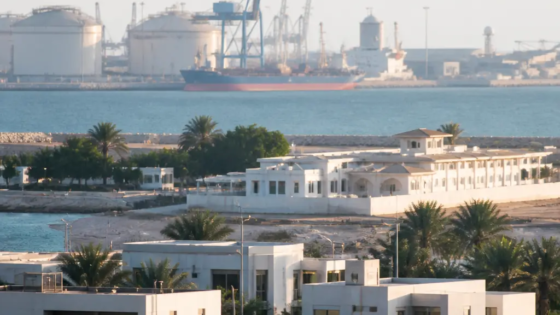
Real Estate in Oman: What Foreigners Can Access in 2026
As of 2026, foreigners can buy freehold homes in designated Integrated Tourism Complexes in Oman, while broader ownership remains restricted in protected areas and on agricultural land. The biggest policy shift is residency: Oman’s Golden Residency thresholds were reformed in 2025, and the official framework now sets a single qualifying threshold from OMR 200,000 for a renewable 10-year residency, while property ownership routes still depend on project status, title structure, and location.
Oman’s Golden Residency thresholds were reformed in 2025, and the official framework now sets a single qualifying threshold from OMR 200,000 for a renewable 10-year residency. For overseas buyers, that matters because it clarifies the difference between simply owning freehold property in Oman and buying within a structure that can also support long-term residence. In 2026, the key question is not whether foreigners can buy at all. They can. The real issue is where, under what title, and with what residency outcome.
Our assessment is straightforward: foreigners should think of Oman’s market as a rules-based market, not a blanket freehold market. Non-Omani buyers have clear access inside approved Integrated Tourism Complexes, or ITCs, including projects in Muscat and Yiti. Outside those zones, ownership is more limited, and some areas are explicitly off-limits. That is why due diligence matters more than headline pricing. For a step-by-step view, see our guide on buying property in Oman as a foreigner.
Oman’s Golden Residency was reformed in 2025; the official framework sets a single qualifying threshold from OMR 200,000 for a renewable 10-year residency — confirm the current figure on the Invest Oman portal. Separately, the ITC ownership framework allows non-Omani buyers to own eligible homes and apply for residency for themselves and first-degree relatives, subject to the project and current regulations.
What foreigners can legally buy in Oman in 2026
For most international buyers, the practical route into real estate in Oman is an Integrated Tourism Complex. The ITC regime was created under a dedicated ownership framework for tourism developments, and it is the clearest channel for non-Omani freehold-style ownership in residential property. Official and developer-backed guidance confirms that non-Omani buyers in ITCs can own eligible property and apply for residency linked to that ownership.
In market terms, that means foreign buyers tend to focus on established or master-planned destinations such as Al Mouj Muscat, Muscat Hills, Jebel Sifah, Muscat Bay, and AIDA in Yiti. These are the names that recur across current project marketing, brokerage inventories, and eligibility guidance. They also matter because they concentrate the stock that is actually available to foreign purchasers under a recognized title framework.
We also see a second layer of access: usufruct-based structures and project-specific rights can exist in Oman, but they are not interchangeable with standard freehold. Buyers should insist on seeing the exact title form, the master development status, and the registration path before signing a reservation agreement or SPA.
Where ownership is restricted
Restrictions remain very real in 2026. Under the law on the prohibition of non-Omani ownership in certain areas, foreigners are barred from owning property in several governorates and strategic locations, including most of Dhofar except Salalah, Musandam, Al Buraimi, Al Dhahirah, and Al Wusta, as well as Liwa, Shinas, Masirah, islands, strategic mountain areas such as Jabal Al Akhdar and Jabal Shams, heritage zones, and land near palaces, military, or security sites. Foreigners are also prohibited from owning agricultural land across all governorates.
“Oman” is not one ownership zone. In 2026, a foreign buyer can be fully eligible in one project and fully restricted a few kilometres away. Always verify whether the asset sits inside an approved ITC and whether the title being sold is the same title being registered.
What the 2026 market looks like for a foreign buyer
Pricing in Oman still spans a wide range by product and location, and it helps to compare Muscat areas and prices before fixing a budget. Public market references used by international researchers place broad residential asking values in Muscat from roughly OMR 600 to OMR 1,200 per sq m in mainstream to prime locations. Older Muscat research also showed one-bedroom apartments from about OMR 38,000 to OMR 105,000, two-bedroom apartments from OMR 50,000 to OMR 142,000, and villas from roughly OMR 130,000 to OMR 558,000 depending on size and district. Those older figures should not be used as live pricing for a specific asset in 2026, but they remain useful as a range check when a quote looks unusually low or unusually high.
On current project-led stock, entry pricing for foreign-buyer-eligible apartments in ITCs commonly starts around OMR 60,000 to OMR 100,000, according to current market-facing residency and sales guides. At the upper end, branded or golf-front villas can move far beyond that range, especially in destinations tied to resort infrastructure and managed communities.
We would separate the market into three practical tiers for 2026:
- Entry ITC apartments: around OMR 60,000–100,000
- Mid-market family apartments and townhouses: often above OMR 100,000
- Prime villas and branded residences: from the mid-six figures in OMR upward, depending on frontage, plot, and project brand
For foreign buyers looking at Yiti, the attraction is not only the legal access. It is also the master-planned nature of the area and the concentration of resort-led supply. Within that context, projects such as Marriott Golf Residences, Aida Oceana Villas, and Trump Golf Villas fit the profile many overseas buyers are actively screening for: freehold eligibility within a tourism-led destination, lifestyle appeal, and a more structured ownership environment.
Residency, family rights, and investment thresholds
This is where 2026 is meaningfully clearer than earlier years. Oman’s Golden Residency programme was relaunched in 2025 with a single qualifying threshold from OMR 200,000 for a renewable 10-year residency. Because the rules are still settling, confirm the current figure on the Invest Oman portal before committing funds. We break down the Oman Golden Visa route in full. Government communication around the programme states that qualifying routes include completed real estate units within ITCs, as well as company investment, bonds, securities, and long-term bank deposits.
That matters for two reasons. First, a buyer who spends below the qualifying threshold may still be able to own eligible ITC property, but that does not automatically place them in the Golden Residency route. Second, buyers often confuse title eligibility with immigration eligibility. They overlap, but they are not the same test. We cover the immigration side in detail in Oman residency through property.
The underlying ITC ownership law also states that a non-Omani owner of property built for accommodation or investment may be granted residence permits for themselves and first-degree relatives. In practice, that makes family planning part of the purchase decision. For many expat households, the question is not only ROI. It is whether the purchase supports a usable base in Muscat over a 5- to 10-year horizon.
We have seen this in client conversations. One buyer we advised was initially focused on the cheapest qualifying apartment. After reviewing residency thresholds, service-charge exposure, and likely resale depth, the better fit turned out to be a larger unit in a stronger master-planned community. Another expat family started by comparing leasehold and freehold marketing claims, but the deciding factor was title clarity and the ability to align ownership with future residence plans.
Costs, yields, and the numbers buyers should verify
Transaction costs in Oman are not the highest in the region, but they are still material. Global Property Guide’s latest country transaction-cost tracker shows total buying costs in Oman at about 4.24% to 4.76% of property value, with roundtrip costs around 9.24% to 9.76%. That is a useful planning metric for anyone modelling a resale strategy rather than a pure lifestyle hold.
For residency-oriented purchases around the OMR 200,000 threshold, third-party 2026 market guides estimate that registration, legal, and administrative costs can add roughly OMR 10,000 to OMR 15,000 on top of the purchase price. That is not an official fee schedule, so buyers should treat it as a planning allowance, not a fixed tariff.
Yield data for Oman remains less transparent than for Dubai or some European markets, so we would be cautious with precise rental-return claims. Our deeper look at yields and taxes on Oman property shows how to sanity-check the numbers. If a sales pitch promises a guaranteed return, walk away. The more realistic approach is to benchmark the unit against comparable ITC stock, service charges, vacancy assumptions, and resale liquidity rather than rely on a single headline ROI number.
Where buyers often go wrong is underestimating the non-price variables: handover timing on off-plan stock, snagging standards, financing access, service-charge structure, and resale depth. In practical terms, those factors can matter more than saving OMR 5,000 on the purchase price.
Developers and market names worth knowing
Foreign buyers researching Oman in 2026 should know the main institutional and project names shaping supply: OMRAN, Muriya, Orascom Development, Al Mouj Muscat, Eagle Hills Muscat, DarGlobal, and Talaat Moustafa Group. Even when you are buying a single apartment or villa, the credibility of the master developer and the maturity of the destination affect infrastructure delivery, amenities, and resale confidence.
What we recommend before buying
Before paying a reservation fee, ask for five specific items: proof that the project sits inside an approved ITC, draft SPA terms, title structure, estimated service charges, and a written explanation of the residency route attached to the purchase. If any of those are vague, pause the deal. Choosing the right adviser matters too; see how to go about choosing a real estate agent in Oman.
For sophisticated buyers, Oman works best as a selective market. The legal route is clear, but it is narrow. That is not a weakness. It simply means the best opportunities are concentrated in the right communities rather than spread across the whole country.
Disclaimer: This article is for general market information only and does not constitute legal, tax, or immigration advice. Rules, fees, and residency procedures can change, and project-specific documentation always takes precedence over marketing material.
Industrial growth alone does not open a market to foreign buyers — see the case of property investment in Sohar.
Related reading: choosing a coastal area before choosing a home
Want to buy property in Oman? Explore our freehold residences →
FAQ: Real Estate in Oman for Foreign Buyers in 2026
Can foreigners buy real estate in Oman in 2026?
Yes. In 2026, foreigners can buy eligible residential property in approved Integrated Tourism Complexes in Oman. Outside those zones, ownership is restricted in many areas and agricultural land remains prohibited for non-Omanis.
What is the minimum investment for Oman Golden Residency in 2026?
The Golden Residency programme was relaunched in 2025 with a single qualifying threshold from OMR 200,000 for a renewable 10-year residency. Completed ITC real estate is one of the qualifying routes; confirm the current figure on the Invest Oman portal.
Does buying property in Oman automatically give residency?
Not automatically in every case. ITC ownership can support residency applications for the owner and first-degree relatives, but the 10-year Golden Residency has its own threshold and eligibility framework. Buyers should confirm both the title and the immigration route in writing.
Where are foreigners not allowed to own property in Oman?
Restricted areas include most of Dhofar except Salalah, Musandam, Al Buraimi, Al Dhahirah, Al Wusta, the wilayats of Liwa, Shinas and Masirah, islands, strategic mountain areas, heritage quarters, and land near security or military sites. Agricultural land is restricted to non-Omanis across all governorates.
How much does foreign-buyer-eligible property cost in Oman in 2026?
Current market-facing guides commonly show entry-level ITC apartments starting around OMR 60,000 to OMR 100,000. Prime villas in established resort-led communities can run into the mid-six figures in OMR and higher.