Close ×
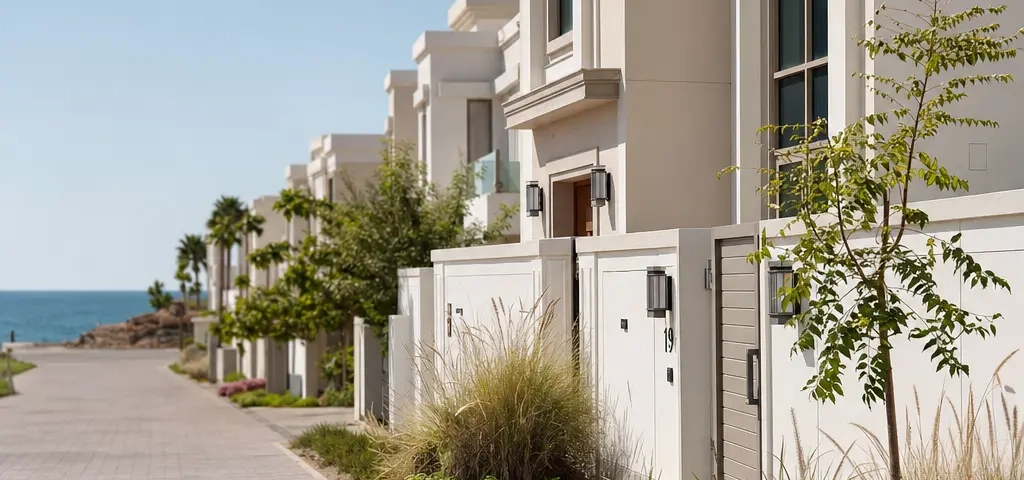
Oman Real Estate Investment Scene With Premium Coastal Homes In Muscat

Real Estate Investment Oman: ROI, Taxes and the Numbers That Matter

At a glance

Muscat residential yields are typically quoted around 5.5%–6.8% gross in 2026, while Oman still offers no recurring annual residential property tax. For foreign buyers using approved freehold structures in Integrated Tourism Complexes, the investment case depends less on tax sheltering and more on entry price, holding costs, handover timing, and realistic net yield after fees.

In 2026, the most important fact for anyone looking at real estate investment Oman is simple: the market is attractive because total ownership friction remains relatively low, not because returns are automatic. Public and market data place gross residential yields in Muscat at about 5.45% in the city centre, 5.97% outside the centre, and around 6.8% on broader market estimates, depending on unit type and location. That is the starting point for any ROI model, not the finish line.

We also need to separate Oman into two investor realities. One is the wider market, where ownership rules differ by asset and location. Our overview of what foreigners can buy in Oman sets out where access applies. The other is approved freehold stock in Integrated Tourism Complexes, where non-Omanis can own property directly. For the mechanics, see how freehold ownership works. That is the legal framework behind projects such as Al Mouj Muscat, Muscat Hills, Hawana Salalah, and AIDA in Yiti. For a project-level comparison, see how Muscat Hills compares with AIDA. Within AIDA, products such as Marriott Golf Residences, Halo Villas, and Aida Oceana Villas fit the freehold, lifestyle-led segment international buyers usually target.

What ROI in Oman really means in 2026

Gross yield is the easiest number to quote and the easiest number to misuse. Global Property Guide explains gross rental yield as annual rent divided by purchase price before costs. In Muscat, public-facing yield references for 2026 cluster in the mid-single digits: 5.45% in central areas, 5.97% outside central areas, and roughly 6%–7% in broader market estimates depending on property size and submarket.

Worth knowing

A gross yield of 6% on a property priced at OMR 200,000 implies about OMR 12,000 in annual rent before service charges, maintenance, vacancy, management, and acquisition costs.

Gross yield vs net yield

For most investors, the useful spread is not 5% versus 7%. It is gross yield versus net cash yield after friction. Oman does not levy personal income tax on residential rental income under the current system for individual investors, and it does not impose a recurring annual residential property tax. That helps preserve net income. But net yield still moves lower once you factor in service charges, maintenance reserves, furnishing, leasing downtime, and agency fees.

In practice, we advise modelling three scenarios. A conservative case might haircut headline gross yield by 1.5–2.0 percentage points. A stabilized case may reduce it by around 1.0–1.5 points. A premium branded asset with stronger occupancy and resale appeal may defend pricing better, but the entry basis is also higher. That is why two units with the same 6% gross yield can deliver very different IRR outcomes over a 5-year hold.

Capital appreciation is location-specific

Price growth in Oman is not uniform. Muscat remains the country’s most liquid residential market, and Yiti has drawn attention because of master-planned resort-led development. Public market references place mainstream Muscat apartment pricing around OMR 600–1,220 per sq m in 2026, with a reported city-centre average of OMR 1,023 per sq m. Premium integrated communities can price materially above that, especially when the asset includes sea views, golf positioning, hospitality branding, or restricted freehold stock.

For investors, that means appreciation should be underwritten from supply quality and buyer pool depth, not broad national averages. In our view, the strongest Oman strategies are usually built around exit liquidity: who will buy the unit from you in 3–7 years, and at what basis relative to replacement cost?

Taxes and transaction costs: what you actually pay

Oman remains more straightforward than many regional markets, but “tax-light” does not mean “cost-free.” For a clean acquisition model, investors should track at least four layers of cost.

1) Property transfer and registration

Market guidance used by foreign-buyer advisers consistently points to a transfer or registration cost of about 3% of property value on acquisition. On a purchase of OMR 250,000, that alone means roughly OMR 7,500 in one-time government registration cost, before financing or furnishing.

2) Mortgage registration

If financing is used, the government mortgage registration fee is 0.5% of the property value, according to the official service page. There are also small fixed charges listed on the same service: OMR 5 for application submission, OMR 2 for mortgage contract fees, and OMR 10 to print ownership documents.

Worth knowing

At OMR 300,000, the official 0.5% mortgage registration fee adds OMR 1,500 before bank-specific arrangement charges.

3) VAT treatment

VAT in Oman is 5%, but residential real estate needs careful interpretation. The Tax Authority states that certain residential property transactions, including resales and leases, are exempt from VAT. Its real-estate manual adds an important distinction: the first supply of a residential property is subject to 5% VAT, while the resale of a residential property is exempt. It also states that qualifying residential rental is exempt when the occupation period is more than 3 months and structured under relevant tenancy rules.

That creates a practical difference between buying off-plan or newly delivered stock and buying resale stock. It also means short-stay inventory, serviced apartments, hotel-style stock, and some mixed-use assets should be underwritten differently.

Watch out for

Investors often hear “Oman property is VAT-free.” That is not precise. Residential resale and qualifying long-term residential leases are exempt, but first supply of residential property is subject to 5% VAT, and service charges may also attract 5% VAT depending on structure.

4) Ongoing annual taxes

For direct individual ownership, Oman does not impose annual residential property tax, and the current system does not tax individual residential rental income in the same way many Western markets do. That is one reason gross-to-net slippage can be lower than in high-tax jurisdictions. The main annual drag is therefore operational rather than fiscal: maintenance, sinking fund exposure, furnishing refresh, and community charges.

Foreign ownership, residency, and approved structures

Foreign ownership is central to the Oman investment story. The official government service confirms that non-Omanis can own real estate in tourist complexes, which is the functional route international buyers use for freehold residential exposure. The Ministry of Housing and Urban Planning administers this framework.

For residency, official Invest Oman guidance says property investment of at least OMR 250,000 can qualify under investor residency routes, while OMR 500,000 is the higher published threshold for longer-duration status in that framework. The family side of the same calculation is covered in our guide to family residency in Oman after a home purchase. Because residency rules have evolved, we recommend checking the live government portal at the point of purchase rather than relying on broker summaries. We walk through the process in Oman residency through property.

This matters because the residency angle changes ROI behaviour. The 10-year route is set out in our Oman Golden Visa guide. Buyers at OMR 250,000–500,000 are not always yield-maximizers. Some are combining lifestyle use, family planning, GCC diversification, and long-term residency optionality. That broadens the resale pool for well-positioned freehold stock, especially in master-planned coastal projects.

Where the numbers look most investable

In Oman, we would segment opportunities into four broad buckets: mainstream Muscat apartments, premium freehold apartments, branded residences, and villas in destination-led master plans. Each has a different return profile.

Mainstream apartments

These are usually the clearest income plays. Entry pricing in broader Muscat remains lower, and publicly cited yields near 5.5%–6.8% gross are easier to support when units target working professionals and long-term tenants. Current furnished apartment rents in Muscat show what those tenants actually pay. The trade-off is weaker scarcity value and less international resale visibility.

Premium freehold and branded stock

This is where buyers pay for legal clarity, master-plan quality, hospitality adjacency, and international buyer demand. Communities associated with OMRAN, DarGlobal, Al Mouj Muscat, Eagle Hills Muscat, and Muriya/Orascom have shaped much of the conversation around internationally marketable Omani property. Yields may not always be the highest on paper, but capital preservation and exit depth can be stronger. For the brand-premium question specifically, see whether Marriott and Trump branded residences justify their pricing. The same discipline applies to hotel residences investment in Oman, where owner income depends on the operating agreement rather than headline hotel data.

AIDA and Yiti positioning

AIDA sits in Yiti, a coastal area southeast of central Muscat. Public developer-linked pricing references indicate AIDA entry pricing from about US$422,000, while some Yiti villa marketing references cite starting levels from roughly OMR 168,000 and project handover windows around Q4 2028 for selected stock. We would treat exact unit pricing as inventory-specific, but the strategic point is clear: AIDA is being positioned in the premium freehold bracket rather than the mass-income bracket. Assets such as Trump Golf Villas or Fairway Villas therefore need to be judged on blended ROI: lifestyle demand, resale strategy, and long-term scarcity, not rent alone.

📈
Yield-focused investor
Target range: 5.5%–6.8% gross
Usually better matched to well-located long-term rental apartments in Muscat where rent-to-price ratios are easier to support and vacancy assumptions are easier to model.
🌍
Residency-minded buyer
Key threshold: OMR 250,000+
Often prioritises approved freehold ownership and residency eligibility over maximum annual yield. This profile usually values legal clarity and long-term hold flexibility.
🏝️
Lifestyle plus resale buyer
Premium segment, handover-led
Best suited to branded or destination-led stock where the exit may depend more on scarcity, sea views, golf access, and community quality than on immediate income yield.

Our assessment: when Oman works best as an investment

We see the strongest case for Oman when investors want a tax-efficient, politically stable GCC market with straightforward freehold access in designated projects and realistic mid-single-digit gross yields. Invest Oman highlights FDI stock of US$78.78 billion in 2025 and notes the Omani rial’s peg to the US dollar, both relevant for currency-sensitive international buyers.

From experience, buyers who do best in Oman usually avoid two mistakes. First, they do not underwrite premium coastal stock as if it were a pure cash-yield apartment block. Second, they do not ignore acquisition friction: 3% transfer cost, possible 5% VAT on first supply, 0.5% mortgage registration, and the impact of handover timing can materially change year-one ROI.

We have also seen expat buyers start by comparing Oman with Dubai on headline appreciation and then recalibrate quickly. We lay out that comparison in Oman vs UAE for investors. Oman is a different proposition. The appeal is steadier entry pricing, simpler annual tax exposure, and selective scarcity in approved freehold zones. If your priority is balanced GCC diversification rather than the most aggressive short-cycle growth story, that can be a rational allocation.

Disclaimer: This article is for general market information only and is not legal, tax, or investment advice. Rules on VAT, residency, title structure, and financing should be checked against the latest official guidance before reservation or transfer.

Interested in Oman property investment? Download the Aida Oceana project brochure →

For a closer look at how VAT, corporate rates and the 2028 personal income tax shape net returns, see our review of Oman real estate tax benefits.

FAQ: Real Estate Investment in Oman

What rental yield can investors expect from residential property in Oman in 2026?

Public 2026 market references for Muscat cluster around 5.45% gross in central areas, 5.97% outside the centre, and roughly 6%–7% in broader market estimates depending on unit type, location, and purchase basis.

Does Oman charge annual property tax on residential real estate?

No recurring annual residential property tax is generally applied in Oman. For individual investors, the bigger cost items are usually transfer fees, possible VAT on first supply, service charges, maintenance, and vacancy.

Is VAT payable when buying property in Oman?

It depends on the transaction. The first supply of residential property is subject to 5% VAT, while the resale of residential property is exempt. Qualifying long-term residential leases are also exempt, but hotel-style and short-term stays are not treated the same way.

Can foreigners buy freehold property in Oman?

Yes, non-Omanis can buy property in approved Integrated Tourism Complexes. This is the main freehold route used by expatriates and international investors in projects such as AIDA, Al Mouj Muscat, Muscat Hills, and Hawana Salalah.

What are the main transaction costs when investing in Oman real estate?

Investors should usually model around 3% for transfer or registration cost, 0.5% of property value for mortgage registration if financing is used, and possible 5% VAT if the purchase is a first supply of residential property. Small fixed administrative fees may apply as well.

Can buying property in Oman help with residency?

Official Invest Oman guidance states that property investment from OMR 250,000 can qualify under investor residency routes, with OMR 500,000 used as a higher threshold in the published framework. Buyers should confirm current rules on the official portal before purchase.


Foreign Buyer Reviewing Freehold Property Options In Oman At A Modern Coastal Residential Development Near Muscat

Freehold Property in Oman: A Complete Guide for Foreign Buyers

At a glance

Foreign buyers can own freehold property in Oman, but only in designated Integrated Tourism Complexes (ITCs) rather than across the open market. In 2026, the practical numbers to know are a 3% transfer fee for foreign buyers, mortgage finance up to 70% at around 6.00% p.a. from one major bank, and a 10-year investor residency route linked to qualifying investment thresholds.

Foreign ownership in Oman is more straightforward than many first-time buyers expect, but it is not universal. The key distinction is that non-Omanis can buy freehold property in approved Integrated Tourism Complexes under the legal framework first issued by Royal Decree No. 12/2006 and its executive regulations, while ordinary residential plots outside those zones generally do not follow the same ownership model for overseas buyers. Our overview of what foreigners can buy in Oman maps the full picture. That distinction shapes everything from due diligence to financing, resale strategy, and long-term residency planning.

For international investors and expatriates, Muscat remains the most relevant entry point. Projects in and around Yiti and the wider capital market sit inside the part of Oman where institutional development, tourism infrastructure, and branded residences are most visible. If you are reviewing options inside AIDA, current examples include Marriott Golf Residences, The Great Escape 2, and Aida Oceana Villas.

What freehold property means in Oman

In Oman, freehold for foreign buyers means full ownership of the unit within an approved ITC project, together with the right to register title through the official system. The government service framework for ITCs cites Royal Decree No. 12/2006 and Ministerial Decree No. 191/2007 as the basis for non-Omani ownership in these complexes, and the same framework states a service timeline of up to 6 months for an ITC licence application at project level, with a listed application fee of OMR 500. For an end buyer, that matters because it confirms the legal structure is project-based, not citywide.

Worth knowing

Foreign buyers are not buying “any property in Oman”. They are buying within licensed ITCs, the legal format specifically created for non-Omani freehold ownership.

This is why project selection matters more in Oman than in some other markets. Buyers should look not only at the unit, but also at the master developer, title status, phasing, hotel or golf components, and handover schedule. In March 2026, the government announced another ITC in Al Qurum with an estimated project cost of around OMR 230 million, a site area of roughly 165,000 sq m, more than 400 hotel units, and a phased delivery horizon of 15 years. That gives a useful benchmark for how large and long-cycle these developments can be. The current map of these zones is in our full list of ITC freehold zones in Oman.

Who operates in Oman’s ITC market

Real names matter here. Active or widely referenced players in Oman’s tourism-led residential market include DarGlobal, OMRAN Group, Muriya (the OMRAN-Orascom joint venture behind Jebel Sifah), ASAAS, and Alargan International Real Estate Company. On the hospitality and branded side, Marriott and Trump-branded assets are also visible in the AIDA ecosystem. For buyers, that means the market is not just retail-led; it is anchored by institutional and quasi-institutional developers.

Where foreigners can buy and why Muscat dominates demand

Muscat attracts most overseas buyer attention because the capital combines infrastructure, airport access, established expat demand, and the deepest pipeline of premium master-planned schemes. DarGlobal describes AIDA as a gated golf community 130 metres above sea level and around 75 minutes from Dubai by air, which helps explain its positioning for regional second-home and investment demand. Separately, an Invest Oman opportunity in Yiti and Yankat Phase III describes 53.2 hectares of serviced land, or about 532,000 sq m, with capacity for up to 400,000 sq m of mixed-use GFA and a stated implementation duration of 5 years.

From an investment lens, Oman is also supported by a relatively stable macro backdrop shaped by Oman Vision 2040. The IMF projected Oman’s real GDP growth at 3.8% in 2026, with non-hydrocarbon GDP growth at 3.7% and inflation around 1.2%. We view that as supportive for mid-term owner-occupier and second-home demand because low inflation and non-oil growth tend to help financing conditions and buyer confidence.

Watch out for

Not every project marketed to foreigners has the same liquidity profile. In Oman, exit speed depends heavily on location, phasing, delivered amenities, and whether the wider community is already operating rather than only promised on paper.

How AIDA fits the freehold conversation

AIDA is relevant because it sits inside the ITC model foreign buyers actually need. It also combines lifestyle drivers that matter for resale strategy: branded residences, coastal positioning, golf, and hospitality integration. For buyers comparing formats, villas such as Halo Villas and premium stock such as Trump Cliff Villas target different holding periods and buyer profiles, but both operate inside the same legal ownership logic. Buyers weighing the hospitality-led format can also review our comparison of hotel residences investment in Oman.

Costs, financing, and the real budget foreign buyers should plan for

The headline purchase price is only one part of the equation. In 2026, one commonly cited transfer cost benchmark is a 3% Ministry transfer fee for foreign buyers, while Omani nationals reportedly pay 1% after the January 2026 reduction. Mortgage-related government charges also matter: National Bank of Oman lists mortgage creation charges at 0.5% payable to the Ministry of Housing. On the lending side, Sohar International states expatriate housing finance up to OMR 250,000, up to 70% of property value, at 6.00% p.a., specifically for approved ITC projects.

In practice, that means a foreign buyer financing a unit should model at least four core buckets: down payment, transfer fee, mortgage creation costs where applicable, and insurance or bank processing charges. For the full return picture, see yields, taxes and ROI in Oman. We recommend stress-testing your plan for a 30% equity contribution if the bank caps LTV at 70%, rather than assuming aggressive leverage.

Timing matters too. DarGlobal’s contractor announcement for part of AIDA targeted handover of The Great Escape apartments and Phase 1 villas in Q3 2028. If you are buying off-plan, handover timing affects mortgage drawdown, snagging, furnishing, and the point at which a rental or personal-use strategy can begin.

Residency thresholds buyers should understand

Residency rules have evolved, so buyers should separate old marketing language from current practice. Oman’s Golden Residency thresholds were reformed in 2025-2026, and official sources cite figures from OMR 200,000 to OMR 500,000 depending on tier, route and duration. Because implementation details are still settling, we recommend buyers verify the current threshold and eligible property structure on the Invest Oman portal before committing funds. We cover the routes in Oman residency through property.

Worth knowing

Residency and ownership are linked, but they are not the same thing. A property can be legally freehold in an ITC, while residency eligibility depends on separate threshold and compliance rules at the time you apply.

What due diligence should cover before you sign

Freehold ownership in Oman is clear when the project sits inside the right legal framework, but buyers still need project-level due diligence. We recommend checking the SPA, title issuance process, payment schedule, service charge assumptions, completion milestones, and whether amenities are phase-dependent. If a project is still under construction, ask what is already contracted, what is only planned, and what sits outside the residential parcel.

We also suggest looking at the developer’s delivery record. DarGlobal, OMRAN, Muriya, and ASAAS each sit in different parts of the Omani market, so their projects should not be compared as if they carry identical execution risk. A large tourism-led master plan can have a 5-year implementation duration, an 8-year payback target at project level, or even a 15-year phasing horizon depending on asset type and sponsor structure. That does not make it unsuitable; it simply changes the holding-period logic.

From our side, the most common mistake we see is buyers focusing on brochure design before they understand title, costs, and exit conditions. We have also seen expat buyers start with the idea of a holiday home, then shift toward a longer-term ownership plan once they understand how ITC ownership, financing, and residency can work together.

Who freehold property in Oman suits best

🌍
Lifestyle-led expat buyer
10-year residency route subject to threshold rules
Best for buyers who want a base in Muscat and value legal ownership in an ITC. This profile usually prioritises completed amenities, airport access, and easy property management over maximum leverage.
📈
Mid-term capital growth investor
30% equity if finance is capped at 70% LTV
Suitable for investors prepared to hold through handover and early community maturation. In Oman, location inside a credible master plan matters more than chasing the lowest entry ticket.
🏡
Cash buyer seeking low-tax ownership
0% recurring annual property tax in common buyer guides
This profile values simplicity. Oman does not typically impose a recurring annual government property tax on ownership, which can make holding costs easier to model than in some other jurisdictions.

Freehold property in Oman is not a mass-market ownership regime for foreigners; it is a regulated, project-based route centered on ITCs. For the right buyer, that is not a drawback. It creates a more defined legal map: you know where foreign ownership is permitted, which developers are active, what transfer costs to budget, and how residency may fit into the decision.

If you are comparing AIDA against other Muscat options, start with the structure first: legal zone, developer, handover timing, finance terms, and total acquisition cost. Then compare product type, whether that means branded apartments, golf residences, or villas in a lower-density setting. That order usually leads to better decisions than starting from marketing alone.

Sources referenced: Ministry of Heritage and Tourism, Gov.om, Invest Oman, IMF, Sohar International, National Bank of Oman, Global Property Guide.

Disclaimer: This article is for general market information and does not constitute legal, tax, mortgage, or immigration advice. Rules, fees, lending terms, and residency thresholds can change, so buyers should confirm current terms with the Ministry, their bank, and a qualified local lawyer before signing.

Interested in Oman real estate investment? Download the Aida Oceana project brochure →

Once ownership rules are clear, the next question is the fiscal side: we cover VAT exemptions and company rates in our guide to tax benefits for property owners in Oman.

Freehold Property in Oman FAQ

Can foreigners buy freehold property in Oman?

Yes, but typically only in designated Integrated Tourism Complexes (ITCs). These projects operate under the legal framework for non-Omani ownership rather than the general residential market.

What is the property transfer fee for foreign buyers in Oman in 2026?

A commonly cited 2026 benchmark is 3% of the property value for foreign buyers, payable on transfer. Buyers should still confirm the current fee with the Ministry or their legal adviser before completion.

Can expats get a mortgage for freehold property in Oman?

Yes. One major bank, Sohar International, advertises expatriate housing finance up to OMR 250,000, up to 70% of property value, at 6.00% p.a. for approved ITC projects.

Does buying freehold property in Oman give residency?

Ownership and residency are related but separate. In 2026, investors can apply through Oman’s Golden Residency platform, but the qualifying investment threshold and application conditions should be checked at the time of purchase.

What is an ITC in Oman real estate?

ITC stands for Integrated Tourism Complex. It is the main legal structure that allows non-Omanis to own freehold property in specific master-planned developments.

Foreign Buyers Reviewing Residential Property Options In Muscat, Oman In 2026

Real Estate in Oman: What Foreigners Can Access in 2026

At a glance

As of 2026, foreigners can buy freehold homes in designated Integrated Tourism Complexes in Oman, while broader ownership remains restricted in protected areas and on agricultural land. The biggest policy shift is residency: Oman’s Golden Residency thresholds were reformed in 2025–2026, and official sources cite figures from OMR 200,000 to OMR 500,000 depending on tier, route and duration, while property ownership routes still depend on project status, title structure, and location.

Oman’s Golden Residency thresholds were reformed in 2025–2026, and official sources cite figures from OMR 200,000 to OMR 500,000 depending on tier, route and duration. For overseas buyers, that matters because it clarifies the difference between simply owning freehold property in Oman and buying within a structure that can also support long-term residence. In 2026, the key question is not whether foreigners can buy at all. They can. The real issue is where, under what title, and with what residency outcome.

Our assessment is straightforward: foreigners should think of Oman’s market as a rules-based market, not a blanket freehold market. Non-Omani buyers have clear access inside approved Integrated Tourism Complexes, or ITCs, including projects in Muscat and Yiti. Outside those zones, ownership is more limited, and some areas are explicitly off-limits. That is why due diligence matters more than headline pricing. For a step-by-step view, see our guide on buying property in Oman as a foreigner.

Worth knowing

Oman’s Golden Residency thresholds were reformed in 2025–2026; official sources cite figures from OMR 200,000 to OMR 500,000 depending on tier, route and duration, so confirm the current figure on the Invest Oman portal. Separately, the ITC ownership framework allows non-Omani buyers to own eligible homes and apply for residency for themselves and first-degree relatives, subject to the project and current regulations.

What foreigners can legally buy in Oman in 2026

For most international buyers, the practical route into real estate in Oman is an Integrated Tourism Complex. The ITC regime was created under a dedicated ownership framework for tourism developments, and it is the clearest channel for non-Omani freehold-style ownership in residential property. Official and developer-backed guidance confirms that non-Omani buyers in ITCs can own eligible property and apply for residency linked to that ownership.

In market terms, that means foreign buyers tend to focus on established or master-planned destinations such as Al Mouj Muscat, Muscat Hills, Jebel Sifah, Muscat Bay, and AIDA in Yiti. These are the names that recur across current project marketing, brokerage inventories, and eligibility guidance. They also matter because they concentrate the stock that is actually available to foreign purchasers under a recognized title framework.

We also see a second layer of access: usufruct-based structures and project-specific rights can exist in Oman, but they are not interchangeable with standard freehold. Buyers should insist on seeing the exact title form, the master development status, and the registration path before signing a reservation agreement or SPA.

Where ownership is restricted

Restrictions remain very real in 2026. Under the law on the prohibition of non-Omani ownership in certain areas, foreigners are barred from owning property in several governorates and strategic locations, including most of Dhofar except Salalah, Musandam, Al Buraimi, Al Dhahirah, and Al Wusta, as well as Liwa, Shinas, Masirah, islands, strategic mountain areas such as Jabal Al Akhdar and Jabal Shams, heritage zones, and land near palaces, military, or security sites. Foreigners are also prohibited from owning agricultural land across all governorates.

Watch out for

“Oman” is not one ownership zone. In 2026, a foreign buyer can be fully eligible in one project and fully restricted a few kilometres away. Always verify whether the asset sits inside an approved ITC and whether the title being sold is the same title being registered.

What the 2026 market looks like for a foreign buyer

Pricing in Oman still spans a wide range by product and location, and it helps to compare Muscat areas and prices before fixing a budget. Public market references used by international researchers place broad residential asking values in Muscat from roughly OMR 600 to OMR 1,200 per sq m in mainstream to prime locations. Older Muscat research also showed one-bedroom apartments from about OMR 38,000 to OMR 105,000, two-bedroom apartments from OMR 50,000 to OMR 142,000, and villas from roughly OMR 130,000 to OMR 558,000 depending on size and district. Those older figures should not be used as live pricing for a specific asset in 2026, but they remain useful as a range check when a quote looks unusually low or unusually high.

On current project-led stock, entry pricing for foreign-buyer-eligible apartments in ITCs commonly starts around OMR 60,000 to OMR 100,000, according to current market-facing residency and sales guides. At the upper end, branded or golf-front villas can move far beyond that range, especially in destinations tied to resort infrastructure and managed communities.

We would separate the market into three practical tiers for 2026:

  • Entry ITC apartments: around OMR 60,000–100,000
  • Mid-market family apartments and townhouses: often above OMR 100,000
  • Prime villas and branded residences: from the mid-six figures in OMR upward, depending on frontage, plot, and project brand

For foreign buyers looking at Yiti, the attraction is not only the legal access. It is also the master-planned nature of the area and the concentration of resort-led supply. Within that context, projects such as Marriott Golf Residences, Aida Oceana Villas, and Trump Golf Villas fit the profile many overseas buyers are actively screening for: freehold eligibility within a tourism-led destination, lifestyle appeal, and a more structured ownership environment.

Residency, family rights, and investment thresholds

This is where 2026 is meaningfully clearer than earlier years. Oman’s Golden Residency programme was reformed in 2025–2026, and official sources cite qualifying thresholds from OMR 200,000 to OMR 500,000 depending on tier, route and duration. Because the rules are still settling, confirm the current figure on the Invest Oman portal before committing funds. We break down the Oman Golden Visa route in full. Government communication around the programme states that qualifying routes include completed real estate units within ITCs, as well as company investment, bonds, securities, and long-term bank deposits.

That matters for two reasons. First, a buyer who spends below the qualifying threshold may still be able to own eligible ITC property, but that does not automatically place them in the Golden Residency route. Second, buyers often confuse title eligibility with immigration eligibility. They overlap, but they are not the same test. We cover the immigration side in detail in Oman residency through property.

The underlying ITC ownership law also states that a non-Omani owner of property built for accommodation or investment may be granted residence permits for themselves and first-degree relatives. In practice, that makes family planning part of the purchase decision. For many expat households, the question is not only ROI. It is whether the purchase supports a usable base in Muscat over a 5- to 10-year horizon.

We have seen this in client conversations. One buyer we advised was initially focused on the cheapest qualifying apartment. After reviewing residency thresholds, service-charge exposure, and likely resale depth, the better fit turned out to be a larger unit in a stronger master-planned community. Another expat family started by comparing leasehold and freehold marketing claims, but the deciding factor was title clarity and the ability to align ownership with future residence plans.

🏠
Lifestyle buyer
Entry range: OMR 60,000–100,000
Best suited to buyers who want a second home or a Muscat base inside an ITC. The focus here is clean title, community quality, and manageable annual holding costs.
📈
Long-term investor
Golden Residency: OMR 200,000–500,000 range
Relevant for buyers who want a property asset and a long-term residency route. We recommend prioritising projects with established demand drivers and clearer resale positioning.
👨‍👩‍👧‍👦
Expat family
Residency can extend to first-degree relatives
This profile usually values school access, road connectivity, and predictable community management more than headline price alone. In that case, project maturity matters.

Costs, yields, and the numbers buyers should verify

Transaction costs in Oman are not the highest in the region, but they are still material. Global Property Guide’s latest country transaction-cost tracker shows total buying costs in Oman at about 4.24% to 4.76% of property value, with roundtrip costs around 9.24% to 9.76%. That is a useful planning metric for anyone modelling a resale strategy rather than a pure lifestyle hold.

For residency-oriented purchases at the OMR 250,000 level, third-party 2026 market guides estimate that registration, legal, and administrative costs can add roughly OMR 10,000 to OMR 15,000 on top of the purchase price. That is not an official fee schedule, so buyers should treat it as a planning allowance, not a fixed tariff.

Yield data for Oman remains less transparent than for Dubai or some European markets, so we would be cautious with precise rental-return claims. Our deeper look at yields and taxes on Oman property shows how to sanity-check the numbers. If a sales pitch promises a guaranteed return, walk away. The more realistic approach is to benchmark the unit against comparable ITC stock, service charges, vacancy assumptions, and resale liquidity rather than rely on a single headline ROI number.

Where buyers often go wrong is underestimating the non-price variables: handover timing on off-plan stock, snagging standards, financing access, service-charge structure, and resale depth. In practical terms, those factors can matter more than saving OMR 5,000 on the purchase price.

Developers and market names worth knowing

Foreign buyers researching Oman in 2026 should know the main institutional and project names shaping supply: OMRAN, Muriya, Orascom Development, Al Mouj Muscat, Eagle Hills Muscat, DarGlobal, and Talaat Moustafa Group. Even when you are buying a single apartment or villa, the credibility of the master developer and the maturity of the destination affect infrastructure delivery, amenities, and resale confidence.

What we recommend before buying

Before paying a reservation fee, ask for five specific items: proof that the project sits inside an approved ITC, draft SPA terms, title structure, estimated service charges, and a written explanation of the residency route attached to the purchase. If any of those are vague, pause the deal. Choosing the right adviser matters too; see how to go about choosing a real estate agent in Oman.

For sophisticated buyers, Oman works best as a selective market. The legal route is clear, but it is narrow. That is not a weakness. It simply means the best opportunities are concentrated in the right communities rather than spread across the whole country.

Disclaimer: This article is for general market information only and does not constitute legal, tax, or immigration advice. Rules, fees, and residency procedures can change, and project-specific documentation always takes precedence over marketing material.

Want to buy property in Oman? Explore our freehold residences →

FAQ: Real Estate in Oman for Foreign Buyers in 2026

Can foreigners buy real estate in Oman in 2026?

Yes. In 2026, foreigners can buy eligible residential property in approved Integrated Tourism Complexes in Oman. Outside those zones, ownership is restricted in many areas and agricultural land remains prohibited for non-Omanis.

What is the minimum investment for Oman Golden Residency in 2026?

The Golden Residency programme was reformed in 2025-2026, and official sources cite qualifying thresholds from OMR 200,000 to OMR 500,000 depending on tier, route and duration. Completed ITC real estate is one of the qualifying routes; confirm the current figure on the Invest Oman portal.

Does buying property in Oman automatically give residency?

Not automatically in every case. ITC ownership can support residency applications for the owner and first-degree relatives, but the 10-year Golden Residency has its own threshold and eligibility framework. Buyers should confirm both the title and the immigration route in writing.

Where are foreigners not allowed to own property in Oman?

Restricted areas include most of Dhofar except Salalah, Musandam, Al Buraimi, Al Dhahirah, Al Wusta, the wilayats of Liwa, Shinas and Masirah, islands, strategic mountain areas, heritage quarters, and land near security or military sites. Agricultural land is restricted to non-Omanis across all governorates.

How much does foreign-buyer-eligible property cost in Oman in 2026?

Current market-facing guides commonly show entry-level ITC apartments starting around OMR 60,000 to OMR 100,000. Prime villas in established resort-led communities can run into the mid-six figures in OMR and higher.

Expats Viewing A Modern Apartment In Muscat In Natural Daylight

How to Rent an Apartment in Muscat: A Complete Expat Guide for 2026

At a glance

In 2026, benchmark asking rents in Muscat are still relatively moderate by GCC standards: around OMR 245 per month for a one-bedroom in central areas and about OMR 161 outside the centre, based on current market datasets. For most expatriates, the practical challenge is not only price, but matching the lease structure, visa paperwork, utilities and district choice to how long they plan to stay.

As of May 2026, typical market benchmarks for an apartment for rent Muscat search sit at about OMR 244.9 for a one-bedroom in the city centre, OMR 161.2 outside the centre, OMR 490.5 for a three-bedroom in central locations and OMR 297.8 outside central districts. That matters because Muscat is not a one-price rental market. A tenant comparing Al Mouj, Qurum, Azaiba, Al Khuwair and Madinat Sultan Qaboos is really comparing commute time, furnishing level, building quality and family setup as much as headline rent.

We see many first-time expats focus too narrowly on the monthly figure. In practice, the better question is this: how much total housing cost will you carry over 12 months once you add utilities, parking, school run logistics and lease conditions? In Muscat, that approach saves time and avoids expensive re-negotiation after move-in.

What rent levels look like in Muscat in 2026

Current citywide data gives a useful baseline. Numbeo’s 2026 Muscat dataset shows a 1-bedroom in the centre at OMR 180–350 per month and a 1-bedroom outside the centre at OMR 120–219. For larger households, the same source shows 3-bedroom units at OMR 400–650 in central areas and OMR 200–400 outside them. Those are broad ranges, but they are a workable starting point for budgeting in 2026.

Worth knowing

For family budgeting, the gap between a central and non-central one-bedroom is about OMR 84 per month based on May 2026 market averages. Over a 12-month lease, that is roughly OMR 1,000 before utilities.

How district choice changes the number

Listing concentration also tells you where the market is deepest. Recent rental portal snapshots show high apartment supply in Al Mouj, Al Khuwair, Azaiba, Al Ghubrah, Qurum, Bosher and Madinat Sultan Qaboos. In other words, expats have the most room to compare terms in exactly the districts they usually shortlist first.

Broadly, Al Mouj and Qurum tend to command a premium for lifestyle and positioning, while Azaiba, Al Khuwair and parts of Al Ghubrah often work better for tenants who want a simpler rent-to-commute balance. We break the numbers down further in Muscat rent prices by area. If your employer is near the airport corridor, paying central-seafront pricing may not improve day-to-day living enough to justify the gap.

What we usually tell relocating tenants

When we assess rental decisions, we separate the search into three brackets: OMR 120–220 for practical one-bedroom stock outside the centre, OMR 180–350 for better-located one-bedroom units, and OMR 300–650 for family-sized apartments depending on district and furnishing. That framework is simple, but it mirrors how expats actually search.

How to choose the right area before signing

For an expatriate household, area choice should follow daily routine. Al Mouj appeals to tenants who want walkability, branded retail and a more resort-like environment. Qurum remains popular for established residential streets and access to embassies and older central business zones. Al Khuwair and Azaiba are often practical for professionals working across Muscat’s main east-west road network. Madinat Sultan Qaboos still attracts families who prioritise villa compounds, schools and larger layouts.

We have also seen some expats arrive expecting the same search logic they used in Dubai or Doha. A wider view of Muscat areas and prices helps set expectations. Muscat behaves differently. Urban spread matters more, and two apartments at similar rent can produce very different commute times depending on office location and school route.

👩‍💼
Single professional
Budget often OMR 120–250/month
Usually best served by Al Khuwair, Azaiba or Al Ghubrah, where one-bedroom stock is easier to compare and commute efficiency matters more than waterfront positioning.
👨‍👩‍👧
Family relocating with children
3-bed benchmark OMR 200–650/month
Focus on school run, parking and building management first. A cheaper unit can become more expensive if the route adds daily traffic and a second car.
🌍
Long-stay expat planning ownership later
12-month rent gap can exceed OMR 1,000
This group often rents first to test neighbourhood fit, then compares ownership options in master-planned communities such as Marriott Golf Residences or Aida Oceana Villas.

Documents, visa links and the lease process

For most expatriates, the lease is also a residency document. The Royal Oman Police states that for a family joining visa, the applicant must show a monthly salary of at least OMR 600, hold housing rented in their name or their employer’s name, and provide a copy of the residential lease. The visa is issued for 2 years, is multi-entry, and applies to spouse and children below age 21.

That means your tenancy paperwork can affect more than your housing status. It can feed directly into family residency planning. The official family joining visa fee is OMR 30, while the ROP also notes a OMR 50 fine for delay in renewal or residence registration.

In practical terms, we suggest expats confirm five points before transfer of funds: landlord identity, lease term, furnishing inventory, utility responsibility and whether the lease copy will be usable for residency paperwork. If any of those points is unclear, resolve it before signing, not after handover.

Watch out for

If you need the lease for family residency, do not treat it as a casual side document. The ROP explicitly requires a residential lease copy, and the official salary threshold listed on the current visa page is OMR 600.

Utility costs, disputes and hidden friction points

Rent is only the first layer of cost. Electricity and water bills vary by unit size, AC usage and whether the apartment is occupied year-round in peak summer. While tenant utility spend is usage-based, official 2026 electricity tariff documentation also shows a fixed annual administrative fee of OMR 50 in the cost-reflective tariff structure. Not every residential tenant will feel that in the same way, but it is a reminder to ask how the account is structured and whose name it will sit under.

Dispute rules have also become more structured. Under Ministerial Decision No. 124/2025, effective after publication in January 2026, rental dispute filing fees include OMR 10 for non-financial requests, OMR 10 for financial claims up to OMR 50,000, OMR 50 for claims from OMR 50,001 to 100,000, OMR 200 for OMR 100,001 to 500,000, and OMR 500 for claims above OMR 500,000. Reopening a closed request or seeking interpretation of a decision is also set at OMR 10.

For most residential tenants, disputes never reach those larger brackets. Still, the 2026 fee schedule is useful because it confirms that Oman’s rental framework is formalised, not informal. Keep signed copies, payment proof and inventory lists.

When renting makes sense before buying

For many expats, renting first is the right move even if they expect to stay in Oman for several years. A 12-month lease gives you time to test commute patterns, school logistics and whether you actually want an urban apartment or a master-planned coastal community. We have seen this repeatedly: a tenant starts in central Muscat, then shifts their search toward ownership once they understand lifestyle fit and capital allocation better.

That is where the conversation often moves from “apartment for rent Muscat” to freehold ownership. Buyers who want more space or a branded lifestyle environment typically compare options such as The Great Escape 2, Fairway Villas and other residences within AIDA’s Yiti setting after they have spent time living in Muscat.

Our assessment is simple. If your job term is under 24 months, renting is usually the cleaner route. If your household is stable, you know your preferred district and you are already comparing annual rent against long-term ownership costs, that is when the ownership discussion becomes more relevant. Our overview of what foreigners can buy in Oman is a good starting point.

We also recommend one reality check: Numbeo’s February 2026 data puts Muscat’s gross rental yield at about 5.45% in central areas and 5.97% outside the centre, with price-to-rent ratios of 18.36 and 16.76 respectively. That is useful because it shows renting and buying can both be rational in Muscat depending on holding period and personal use, not only headline affordability.

Disclaimer: This guide is for general information and reflects publicly available market and regulatory data reviewed in 2026. Lease terms, building rules, furnishing standards and visa interpretations can change, so we recommend checking current documents with your landlord, employer, broker and the relevant Omani authorities before signing.

Many expatriates who start with renting later choose to buy. See what ownership looks like at Aida Oceana →

Apartment for Rent Muscat FAQ for Expats

How much does an apartment for rent in Muscat cost in 2026?

As of May 2026, benchmark rents are about OMR 244.9 per month for a one-bedroom in central Muscat and OMR 161.2 outside the centre. For three-bedroom units, current averages are roughly OMR 490.5 in central areas and OMR 297.8 outside them.

Which areas are most popular with expats renting in Muscat?

The main expat search areas include Al Mouj, Qurum, Al Khuwair, Azaiba, Al Ghubrah, Bosher and Madinat Sultan Qaboos. Al Mouj and Qurum usually sit at the higher end, while Al Khuwair and Azaiba are often chosen for commute efficiency and practical pricing.

Do I need a lease agreement in Muscat for a family visa in Oman?

Yes. The Royal Oman Police lists a copy of the residential lease agreement, or a document confirming residence, among the required documents for a family joining visa. The same page states a salary requirement of at least OMR 600 and says the visa is valid for two years.

What is the family joining visa fee in Oman in 2026?

The official fee shown by the Royal Oman Police for a family joining visa is OMR 30. The same source also notes a fine of OMR 50 for delay in renewal or residence registration.

What should expats check before renting an apartment in Muscat?

Check the exact rent, lease term, furnishing inventory, parking, utility responsibility, maintenance response and whether the lease copy can be used for residency paperwork. For budgeting, remember that the citywide gap between a central and non-central one-bedroom is around OMR 84 per month in 2026.

Practical steps to rent an apartment in Muscat as an expat in 2026.

Set your Muscat rental budget by district

Start with 2026 benchmarks: about OMR 180–350 for a one-bedroom in central Muscat and OMR 120–219 outside the centre. Add expected utility and transport costs before you shortlist areas.

Choose the right area for your commute and lifestyle

Compare Al Mouj, Qurum, Al Khuwair, Azaiba, Al Ghubrah and Madinat Sultan Qaboos based on office route, school access, parking, furnishing level and building quality, not only monthly rent.

Verify the lease documents before paying

Ask for the landlord’s identification details, the exact lease term, inventory list, maintenance terms and utility responsibility. If you need family residency paperwork, make sure the lease copy is suitable for visa use.

Confirm visa-linked housing requirements

If your spouse or children will join you, check the current Royal Oman Police rules. The family joining visa page lists a residential lease, a salary threshold of OMR 600 and eligibility for children below 21.

Keep payment and handover records

Save signed contracts, receipts, transfer proofs and move-in photos. If a dispute arises, Oman now has an official 2026 rental dispute fee schedule, so documentation matters.