Yiti, Oman: Why the District Attracts Global Investors
Yiti stands out because it combines a legally accessible ownership structure for foreign buyers with large-scale master-planned development on Muscat’s coastline. In 2026, Oman’s real estate trading value reached OMR678.1 million by the end of March, up 18.4% year on year, while Yiti is being shaped by multi-billion-asset developers and branded projects that are unusual for one emerging coastal district.
By the end of March 2026, Oman’s real estate trading value had reached OMR678.1 million, up 18.4% from OMR572.7 million a year earlier. That matters for Yiti because international capital rarely moves into a new coastal district without clear evidence of market depth, legal structure, and long-term infrastructure delivery. Yiti now has all three.
We see Yiti as one of the few locations in Oman where lifestyle demand, tourism policy, and foreign-buyer accessibility overlap in a way global investors can actually underwrite. The area sits close enough to Muscat to benefit from airport access and city demand, but far enough to offer a distinct coastal masterplan story. Within this corridor, projects linked to OMRAN Group, Dar Global, Diamond Developers, and Trump-branded hospitality have moved Yiti from a scenic location to an investable one.
For buyers comparing Oman with Dubai, Ras Al Khaimah, or selected Saudi coastal schemes, the appeal is not only branding. It is the combination of entry pricing, lower urban density, and the freehold-style ownership route available inside Integrated Tourism Complexes. That framework is a core reason foreign investors keep Yiti on their shortlist. The full map of these zones is in our list of ITC freehold zones in Oman.
Under Oman’s Integrated Tourism Complex law, non-Omani individuals and companies can own land or built units for accommodation or investment inside licensed ITCs, and a non-Omani owner may be granted residency for themselves and first-degree relatives.
Why Yiti is no longer a fringe location
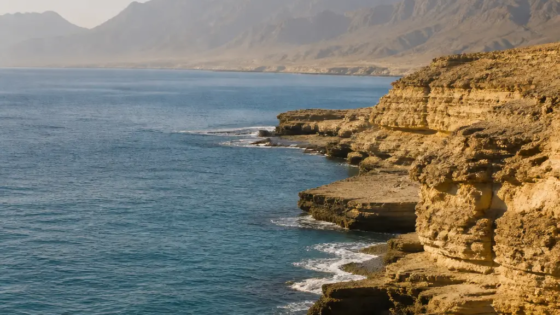
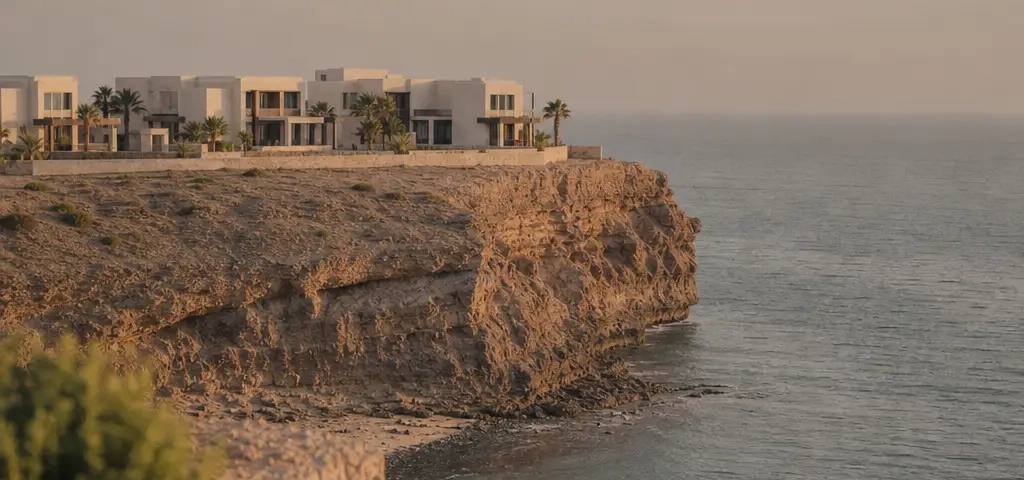
Yiti’s investment case starts with scale. Official project materials describe AIDA by DarGlobal as a master development on a cliffside site around 100 metres above the Sea of Oman, while Dar Global has described the wider project at 4.3–4.4 million square metres depending on project-stage disclosures. That is not boutique stock. It is district-scale development with room for villas, apartments, hospitality, leisure, and golf-led real estate.
The second anchor is neighbouring sustainable urban development. Marriott Golf Residences and other branded inventory in the AIDA area benefit from the same broader positioning that has also brought The Sustainable City – Yiti, a collaboration between OMRAN Group and Diamond Developers, into the district conversation. Investors tend to notice this kind of clustering because one major project reduces execution risk for another.
We also think access matters more than many first-time buyers assume. Oman’s airports handled 14,939,209 passengers in 2025, up 2.8% year on year, and traffic reached 1,452,911 passengers by the end of January 2026, up 8.8% from January 2025. For an investor assessing second-home demand or future resale strategy, that kind of connectivity trend supports the broader Muscat coastal story rather than Yiti in isolation.
Yiti vs established Muscat locations
Large masterplans are still being delivered, which can support capital appreciation if execution stays on track.
Better price discovery, but less scope for district-wide repricing from a low base.
International buyers can own in licensed Integrated Tourism Complexes under the 2006 framework.
Foreign access is strongest in designated projects rather than across standard residential stock.
Branded and coastal stock is priced above city averages, but investors are buying a masterplan and resort context.
Muscat apartment buying averages around OMR1,023 per sq m in the city centre and OMR598 outside the centre as of June 2026.
Best suited to buyers targeting affluent end-users, second-home demand, and future resale to international buyers.
Usually easier to benchmark against conventional city rentals and owner-occupier demand.
Investment case depends on phased delivery of hospitality, golf, roads, and amenities.
Less execution risk, but fewer catalysts from brand-new district creation.
The practical takeaway is simple. If an investor wants immediate conventional urban comparables, central Muscat is easier to model. If the goal is to enter a coastal growth story before full maturity, Yiti is more compelling. A useful contrast is Jebel Sifah, a ready marina resort near Muscat.
In Oman’s ITC framework, a buyer who acquires land rather than a finished unit is generally required to develop or use it within 4 years of registration, with a possible extension of up to 2 additional years if approved. That makes finished residences simpler for many overseas investors than undeveloped plots.
What global investors actually like about the numbers
1. Oman’s macro backdrop is more stable than many assume
According to the IMF, Oman’s economy grew 1.6% in 2024, while nonhydrocarbon growth reached 3.5% year on year in the first half of 2025. Inflation stayed low at 0.9% during January–October 2025, and government debt stood at 36.1% of GDP by September 2025. For real estate buyers, that combination matters because resort-led property stories are easier to finance and resell in stable macro conditions.
2. Tourism is supporting the residential story
Tourism’s direct contribution to Oman’s GDP reached about OMR1.135 billion in 2025, with total tourism output at OMR2.284 billion and tourism consumption at OMR1.177 billion. Classified hotel guests rose 6.1% year on year to 242,106 by the end of January 2026. We view that as important support for Yiti because branded residential markets perform better when the surrounding destination is attracting higher-spending visitors.
3. Muscat pricing still looks moderate in a regional context
As of June 2026, Numbeo data put average apartment purchase prices in Muscat at OMR1,023.33 per sq m in the city centre and OMR597.89 per sq m outside the centre. The same dataset showed a 20-year fixed mortgage reference around 5.25%. Those are citywide benchmarks rather than Yiti-specific quotes, but they help global buyers understand why Oman is often viewed as a lower-entry alternative to prime UAE coastal markets.
On income returns, Muscat’s gross rental yields in 2026 were listed around 5.5% in city-centre locations and 5.8% outside the centre. Coastal branded stock in Yiti should not be modelled as a plain-vanilla city rental, but these benchmarks still help investors compare holding costs and potential income scenarios.
Which names are shaping Yiti’s credibility
Serious investors follow institutions before they follow brochures. In Yiti, five names matter most: OMRAN Group, Dar Global, Diamond Developers, The Trump Organization, and Marriott-linked branded residential hospitality within the wider AIDA ecosystem.
OMRAN is the state-backed tourism development arm that gives projects in this corridor more strategic weight. Dar Global brings cross-border sales reach and branded development experience. Diamond Developers adds credibility on the sustainability side through The Sustainable City – Yiti. The Trump-branded hospitality and golf component gives the district visibility with international buyers who may not have followed Oman otherwise. In practice, this is why buyers often start with branded products such as The Great Escape 2 or higher-end villa stock like Trump Cliff Villas when they want exposure to the Yiti story. Whether that brand premium actually pays off is the question we weigh in Marriott and Trump branded residences.
We have seen this pattern before in emerging resort districts: global capital rarely arrives because of one tower or one beach. It arrives when multiple recognised developers create enough momentum to make the area legible to overseas buyers.
Who Yiti suits best
From our perspective, Yiti is not the right choice for every buyer. If you want fully mature urban infrastructure on day one, parts of central Muscat or Al Mouj may feel more predictable. But if you are comfortable buying into a district that is still repricing as infrastructure arrives, Yiti offers a clearer growth narrative.
We would also add one personal note from client discussions. Buyers relocating from Europe often tell us Yiti feels easier to justify than denser Gulf alternatives because the value proposition is not only rental income. It is space, sea frontage, residency flexibility, and a branded masterplan within an emerging market that still has room to move.
Related reading: which road and transport upgrades could shape values around Yiti
- National Centre for Statistics and Information
- International Monetary Fund
- OMRAN Group
- Dar Global
- Ministry of Housing and Urban Planning
- Oman Airports
- Numbeo
- Global Property Guide
- National Bank of Oman
This article is for informational purposes only and does not constitute investment, legal, or tax advice. Project pricing, fees, financing terms, and residency rules can change, so buyers should verify current terms with the developer, the relevant Omani authorities, and an independent adviser before reserving a property.
Considering property in Oman? Discover the flagship Aida Oceana project in Muscat →
Yiti Oman FAQ
Can foreigners buy property in Yiti, Oman?
Yes, foreign buyers can own property in licensed Integrated Tourism Complexes in Oman. Under Royal Decree 12/2006, non-Omani individuals and companies may own land or built units in these projects for accommodation or investment.
Is Yiti a good area for property investment in Oman?
Yiti appeals to investors because it combines coastal masterplans, international branding, and legal foreign ownership access. The broader Oman market also showed momentum, with real estate trading value reaching OMR678.1 million by the end of March 2026, up 18.4% year on year.
What rental yield can investors expect near Muscat in 2026?
Citywide Muscat benchmarks in 2026 showed gross rental yields around 5.5% in city-centre locations and 5.8% outside the centre. Yiti’s branded coastal stock should be assessed separately, but these figures give a useful market reference.
How much does property cost in Muscat compared with emerging areas like Yiti?
As of June 2026, average apartment prices in Muscat were about OMR1,023.33 per sq m in the city centre and OMR597.89 per sq m outside the centre. Yiti pricing depends on project type, view, brand, and delivery stage, so buyers usually compare it against premium coastal rather than average city stock.
Does buying property in an Oman ITC help with residency?
Oman’s ITC law states that a non-Omani owner of qualifying residential or investment property may be granted residency for themselves and first-degree relatives, subject to the applicable procedures and conditions.
Related reading: for what the district actually offers at the top end, see our comparison of penthouses and luxury villas in Muscat.