Salalah Property Market 2026: Prices, Areas and Outlook
As of May 2026, apartment asking prices in Salalah average about OMR 775 per sq m in the city centre and around OMR 470 per sq m outside central districts, while gross rental yields range from roughly 3.9% in central locations to 6.1% outside the core. In our view, the 2026 Salalah market is driven by three factors: tourism seasonality, foreign freehold demand inside Integrated Tourism Complexes, and lower entry prices than prime Muscat communities like Al Mouj Muscat.
In 2026, anyone researching property for sale Salalah Oman is looking at a market that is still relatively affordable by Gulf standards, but very segmented. The city centre, established residential districts and resort-led freehold stock do not trade on the same logic. Based on Numbeo’s May 2026 data, buy-side pricing in Salalah sits at about OMR 72 per sq ft in the city centre and OMR 43.66 per sq ft outside the centre, which converts to roughly OMR 775 and OMR 470 per sq m. At the same time, Oman’s Q1 2026 residential price index showed apartments up 11.7% quarter on quarter and villas down 3.6% quarter on quarter at the national level, a reminder that product type matters as much as location.
For international buyers, the key distinction is legal structure. Foreign ownership is generally concentrated in Integrated Tourism Complexes, and in Salalah the best-known example is Hawana Salalah by Muriya, the Omani developer backed by OMRAN Group and Orascom Development. We also watch nearby growth narratives linked to Taqah and the wider Dhofar tourism economy rather than treating Salalah as one uniform map.
Salalah Airport handled 1,702,120 passengers in 2025, up 9.9% year on year, while domestic passenger traffic rose 17.7% to 1,023,529. For a seasonal market, that transport growth matters directly for occupancy and resale liquidity.
Where Salalah prices stand in 2026
The cleanest current benchmark for broad retail pricing comes from Numbeo’s May 4, 2026 update. It shows average asking prices of OMR 72 per sq ft in the city centre and OMR 43.66 per sq ft outside the centre. Converted to metric terms, that is approximately OMR 775 per sq m and OMR 470 per sq m. Using a rough USD conversion, that is about USD 2,015 per sq m in central areas and USD 1,220 per sq m outside central areas.
Rental benchmarks are also modest by GCC standards. A one-bedroom apartment averages OMR 95 per month in the city centre and OMR 80 outside it. A three-bedroom apartment averages OMR 243 in the centre and OMR 150 outside. These figures help explain why pure long-let investors should be selective: conventional annual rents are not the full Salalah story. Short-stay demand during Khareef can change the income profile considerably in the right micro-location.
For financing, Numbeo lists a 4.58% average mortgage rate for a 20-year fixed loan, with a reported range of 3.0% to 6.0%. We would treat that as a market indicator rather than a universal bank offer, but it is useful for underwriting.
What yields look like
Gross rental yields in the same dataset are estimated at 3.85% in the city centre and 6.08% outside the centre. That spread is important. In Salalah, lower purchase prices can outperform prime-position pricing on gross yield, especially when buyers focus on practical end-user districts rather than purely prestige-led stock.
We have also seen resort-market materials for Hawana Salalah quote projected returns up to 10.6% ROI on selected products, but we would classify that as developer or broker-led guidance rather than a city-wide market average. In practice, investors should separate stabilized long-let yield, short-let seasonal yield and resale strategy.
Which areas buyers usually compare
Salalah is not a single investment zone. Buyers typically compare four different area types: central Salalah, beach-adjacent districts such as Al Haffa and Dahariz, the western industrial-residential corridor around Raysut and Awqad, and resort-led freehold communities toward Taqah.
1. Hawana Salalah and the Taqah corridor
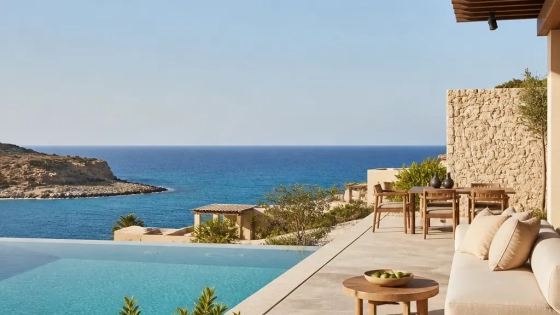
This is the clearest option for foreign buyers who want freehold ownership. Muriya states that buyers in its Integrated Tourism Complexes benefit from freehold status, tax-free property holding and residency eligibility in Oman for the buyer and immediate family. Hawana Salalah is also low-density by master-plan standards, with only 25% of the land developed according to Muriya. For buyers who want managed resort stock, this is usually the first submarket we assess. See our full guide to Hawana Salalah resort property.
Recent asking-price evidence in the resort segment starts around OMR 98,000 for entry-level stock in the Amazi/Lubana product line, with examples around OMR 129,000 for two-bedroom chalets and roughly OMR 218,000 to OMR 260,000 for larger standalone villas. That is a very different price band from legacy urban apartments in Salalah proper.
If you are comparing Salalah resort stock with branded lifestyle inventory in Muscat, it helps to benchmark against projects such as Marriott Golf Residences, Trump Cliff Villas and Aida Oceana Villas, where the investment logic is more capital-value-led than seasonal-tourism-led.
2. Al Haffa and Dahariz
These areas appeal to lifestyle buyers who want proximity to the coast, established urban fabric and easier access to central Salalah. In our experience, these districts are better for owner-occupiers and hybrid second-home buyers than for investors chasing headline yield. Supply quality can vary sharply, so asset selection matters more than district branding.
3. Awqad and Raysut side
These locations are usually considered by value-led buyers and local end users. Entry pricing tends to be lower than in resort stock or premium beach districts, which is why gross yield can look stronger on paper. The trade-off is lower international buyer visibility and less obvious exit demand from foreign purchasers.
What supports the market outlook
The 2026 Salalah outlook is tied closely to tourism access and second-home demand. Civil Aviation Authority and NCSI data show that Salalah Airport recorded 1.70 million passengers in 2025, compared with 1.55 million in 2024, a 9.9% increase. Domestic passengers rose from 869,954 to 1,023,529, up 17.7%. In peak Khareef 2025 periods, the CAA also reported daily round-trip passenger volumes reaching 4,000 on the Muscat-Salalah route.
For 2026, the CAA confirmed additional seasonal readiness, with Oman Air operating from July 1 to September 5, 2026 and SalamAir from July 1 to August 31, 2026 to support Dhofar demand. That matters because Salalah’s occupancy profile remains highly seasonal. A buyer underwriting a holiday-home strategy should base projections on realistic occupied weeks, not annualized peak-season assumptions.
Another long-term support factor is the master-planned resort model. Hawana Salalah remains the flagship southern ITC developed by Muriya. Real names matter here: the key market actors investors should know are Muriya, OMRAN Group, Orascom Development, Ministry of Housing and Urban Planning and the Civil Aviation Authority. These institutions shape legal access, infrastructure and project delivery more than local marketing headlines do.
Salalah is not a uniform rental market. City-wide long-let data shows gross yields of 3.85% to 6.08%, but seasonal short-let projections above that depend heavily on resort management, furnishing costs, occupancy in Khareef and unit type.
Costs, legal access and investor takeaways
Transaction planning matters as much as headline price. Current Oman buyer-cost guides indicate a 3% property transfer fee for foreign buyers, versus 1% for Omani nationals from January 2026, with total acquisition costs often landing in a 5% to 7% range once legal, registration and financing-related expenses are included. We would treat the 3% foreign transfer assumption as a practical budget baseline for Salalah buyers in 2026.
Tax treatment is one reason Oman continues to attract cross-border buyers. Market guidance for 2026 indicates no annual residential property tax for individual owners and no personal capital gains tax on direct residential resale by individuals. That does not remove execution risk, but it does improve net holding economics compared with several other jurisdictions.
From an investment perspective, our assessment is straightforward. If your goal is low-entry urban yield, look at non-core Salalah districts and underwrite around the 6% gross range, not resort-brochure numbers. If your goal is freehold ownership with expat usability, Hawana Salalah is the more relevant benchmark. If your goal is long-term capital positioning in Oman rather than pure Dhofar seasonality, it is worth comparing Salalah with master-planned ownership in Yiti and Muscat, including Halo Villas and Fairway Villas.
We have seen this split in real buyer behavior. One expat family we advised wanted a lower-cost second home and initially focused on central Salalah apartments below resort pricing. Another investor started with yield targets, then shifted toward ITC ownership once residency eligibility and resale to international buyers became part of the equation. In Salalah, the best purchase is often the one that matches your exit route, not the one with the lowest entry ticket.
- Numbeo
- National Centre for Statistics and Information
- Civil Aviation Authority
- Muriya
- Ministry of Housing and Urban Planning
- PwC Middle East
Disclaimer: Market conditions, asking prices, financing terms and legal procedures can change. Buyers should verify title status, ownership eligibility, fees, payment schedules and residency implications with qualified legal and property professionals before committing to a transaction.
Want to buy property in Oman? Explore our freehold residences →
FAQ: Salalah property market 2026
What is the average apartment price in Salalah in 2026?
As of May 2026, average asking prices are about OMR 72 per sq ft in central Salalah and OMR 43.66 per sq ft outside the centre, which is roughly OMR 775 and OMR 470 per sq m.
Can foreigners buy property in Salalah, Oman?
Yes, foreign buyers can access freehold ownership in Integrated Tourism Complexes such as Hawana Salalah. Muriya states that ITC buyers and their immediate family are also eligible for residency in Oman.
Which area is best for buying property in Salalah?
It depends on the goal. Hawana Salalah suits foreign buyers seeking freehold resort property. Al Haffa and Dahariz are stronger for lifestyle use. Value-led investors often look at lower-priced districts outside the core where gross yields can approach the 6% range.
What rental yield can investors expect in Salalah?
Broad-market gross rental yields are estimated at around 3.85% in central areas and 6.08% outside the centre based on 2026 Numbeo data. Seasonal short-let performance can be higher in resort communities, but it varies by occupancy and management.
What are the buying costs for foreign property buyers in Oman in 2026?
A practical planning baseline is a 3% transfer fee for foreign buyers, with total transaction costs often reaching 5% to 7% once registration, legal support and financing-related expenses are included.