Al Mouj Muscat Property: Investing in Muscat’s Premier Seafront District
Al Mouj Muscat remains one of Oman’s most established premium waterfront addresses in 2026, with 29 fine dining restaurants, 77 oceanfront culinary venues, 9 parks and 8 km of cycling and jogging trails already operating inside the district. For buyers focused on prestige, liquidity and lifestyle-led demand, al mouj muscat property sits at the top end of the Muscat market, but entry pricing is materially above the wider Oman average of about OMR 892 per sq m in city-centre locations as of June 2026.
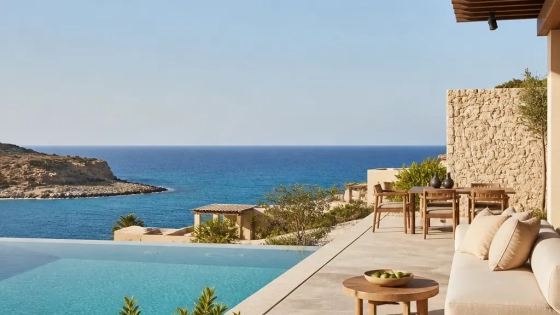
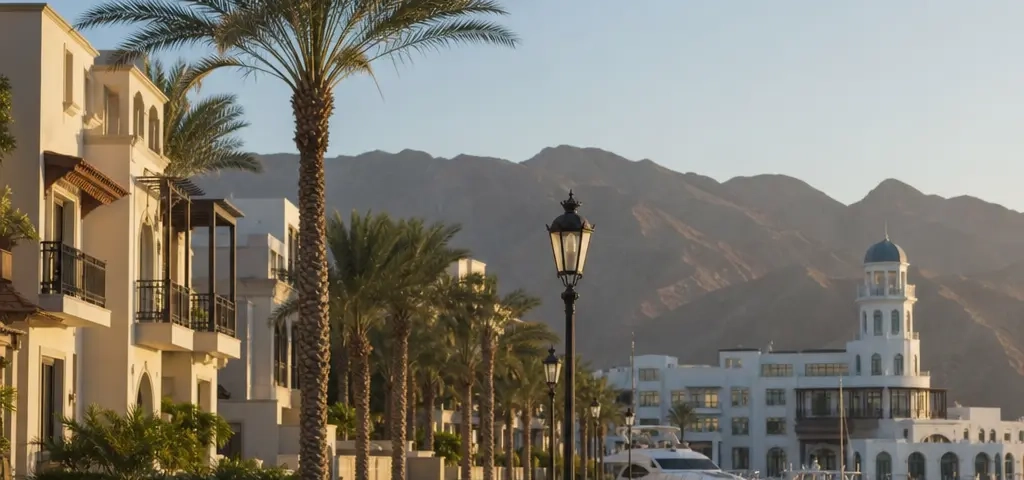
In 2026, Al Mouj Muscat still stands apart because it is not just a branded waterfront concept on paper. It is a functioning coastal district with hospitality, marina infrastructure, golf, dining and a resident base already in place. That matters for investors. In our assessment, established placemaking reduces execution risk versus early-stage masterplans and supports stronger resale strategy potential over time.
For international buyers looking at al mouj muscat property, the investment case is usually built on three pillars: scarcity of premium seafront stock, legal clarity through Oman’s ownership frameworks, and a tenant and buyer profile tied to executives, returning GCC residents and lifestyle-led expatriates. If you are comparing premium addresses in Muscat, Al Mouj is the benchmark most buyers start with.
Why Al Mouj Muscat keeps its premium position
Al Mouj markets itself as Oman’s most prestigious address, and the physical scale of the ecosystem explains why. As of 2026, the district reports 1,156 hospitality keys, 29 fine dining restaurants, 77 oceanfront culinary experiences, 256,000 sq m of green space, 9 parks, 8 outdoor kids’ areas, 4 indoor kids’ areas and 8 km of cycle trails and jogging tracks. It also promotes a 30-minute marina connection to the Dimaniyat Islands. Those are not branding slogans; they are concrete amenities that shape both owner appeal and occupier demand.
Al Mouj Muscat’s live amenity base in 2026 includes 1,156 hospitality keys and 256,000 sq m of green space, which is unusually deep lifestyle infrastructure for one residential district in Oman.
It is a live district, not only an off-plan promise
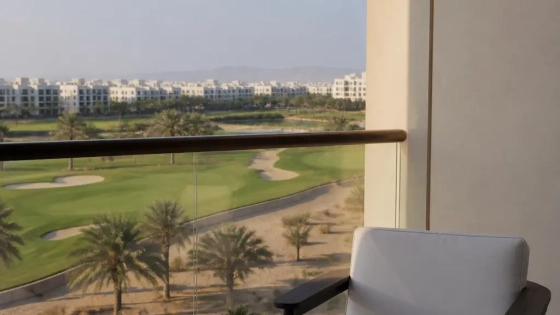
Current inventory at Al Mouj spans marina-view apartments, golf-linked residences, beach apartments, townhouses and large-format villas. Named products now visible on the masterplan include Azura Beach Residences, Golf Links Apartments, Juman One, Juman Two, Marsa Gardens, Amara and the Alaya Grand Collection. Amara villas are listed by the developer at 455 sq m and scheduled ready in 2026, while Alaya lakeside villas are described as over 900 sq m and also targeted for 2026 delivery.
That operating depth is what differentiates Al Mouj from newer prestige schemes. Buyers are not underwriting a blank map. They can inspect the marina, restaurants, beach access, golf frontage and community circulation before committing capital.
Prestige in Muscat is also about comparables
Premium buyers in Oman increasingly compare Al Mouj with a small group of real, named destinations rather than with the whole city. In Muscat, the main reference points are Al Mouj Muscat, AIDA in Yiti, Shatti Al Qurum, Muscat Hills and emerging ITC-led hospitality districts such as Al Bustan’s new OMR 150 million integrated tourism complex announced in March 2026. The Al Bustan project is planned across 138,000 sq m, with a 200-room hotel and 91 branded freehold residences under Four Seasons management. That pipeline confirms where premium capital is concentrating in Muscat.
What the numbers say about Oman market context
At national level, Oman’s average asking benchmark on Numbeo data updated in June 2026 sits around OMR 891.79 per sq m for city-centre apartments and OMR 536.67 per sq m outside the centre. In US dollar terms, that is roughly $2,319 per sq m and $1,396 per sq m respectively. Gross rental yields on the same June 2026 dataset are about 5.12% in city-centre locations and 5.77% outside the centre, while the average 20-year fixed mortgage rate is shown at 5.09%, with a broader submitted range of 3.50% to 6.50%.
Al Mouj typically trades above those broad Oman averages because it is a seafront lifestyle district with marina and golf adjacency. We would not use country averages as a direct pricing proxy for Al Mouj, but they are useful for framing the premium. In practice, buyers should expect Al Mouj to command higher per-sq-m pricing than mainstream Muscat stock because the district bundles freehold accessibility, coastal positioning and branded community infrastructure.
Do not model Al Mouj returns using Oman-wide average yields alone. Premium waterfront stock usually carries a higher entry price, so net yield can compress unless the unit type, furnishing standard and tenant profile are matched carefully.
Transaction and financing costs to budget for
On the cost side, Oman remains relatively straightforward but buyers should still underwrite the full stack. Residential rent is VAT-exempt in Oman. National Bank of Oman states mortgage creation charges at 0.5% payable to the Ministry of Housing by the customer. For financing context, June 2026 market data places typical fixed mortgage pricing around 5.09%, although bank-by-bank offers and borrower profiles can shift that range.
For a leveraged acquisition, that means the spread between gross yield and financing cost is not especially wide in a conservative case. Investors buying for income should therefore focus on high-demand unit layouts, vacancy control and resale depth, not only on headline rent.
Foreign ownership, residency and legal structure
One reason al mouj muscat property remains on international shortlists is legal accessibility. Oman’s investment framework in 2026 allows long-term residency routes through the Investor Residence programme, which offers 5-year or 10-year renewable permits. The Ministry of Commerce, Industry and Investment Promotion also states that the programme allows property ownership outside integrated tourism complexes and family sponsorship, broadening the ownership conversation beyond classic ITC-only models.
At the same time, ITC-style and tourism-linked ownership remains highly relevant for premium residential communities. Ministry-linked investment communications continue to reference 99-year usufruct structures in integrated tourist complexes as part of the foreign investment toolkit. In June 2026, Oman also amended foreign residency regulations to ease procedures for property owners and investors, with the amendments published in Official Gazette No. 1653 on June 21, 2026.
For overseas buyers, the practical takeaway is simple: Oman is moving toward more flexible residency and ownership pathways, but the exact route still depends on the asset, title structure and buyer profile. We recommend checking whether a purchase is being assessed as a pure lifestyle acquisition, a residency-linked acquisition or an income investment, because documentation and timing can differ.
Who Al Mouj suits best in 2026
An on-the-ground perspective
When we walk buyers through Muscat’s premium districts, the reaction to Al Mouj is usually immediate: they understand the product within the first visit because the marina, beachfront and food-and-beverage layer are already active. That shortens decision time.
We also see a second pattern among expat families. They often begin by benchmarking Al Mouj because it is easy to grasp, then expand their search to newer masterplans where the entry point may be different and the product mix more limited but future upside can be stronger. That is where AIDA in Yiti becomes part of the same conversation.
How Al Mouj compares with AIDA in Yiti
Al Mouj is the mature premium seafront district in Muscat. AIDA in Yiti is the newer cliffside, golf-led branded destination that appeals to buyers looking for early positioning in a landmark coastal masterplan. If your priority is immediate liveability, established occupancy and instant district legibility, Al Mouj has the advantage. If your priority is buying into a newer luxury story with curated branded inventory, Yiti deserves a close look.
That comparison is why many international buyers who research al mouj muscat property also review AIDA products such as Halo Villas and The Great Escape 2. The decision is less about which district is “better” and more about whether you want a fully matured coastal ecosystem now or a newer branded setting with a different growth curve.
Source-based figures in this article are current as of July 6, 2026. Real estate pricing, mortgage terms, residency rules and developer inventory can change. Buyers should verify title structure, fees, financing terms and handover status before reserving a unit.
Related reading: if you are weighing formats rather than districts, see how penthouses compare with luxury villas in Muscat.
Related reading: the district is one thing, the company behind the keys is another — see how to assess real estate developers in Oman.
For a smaller, resort-led alternative on the same coastline, see our profile of Muscat Bay and how it compares with AIDA.
To see how Al Mouj sits alongside Muscat Bay, Jebel Sifah and AIDA, read our comparison of Muscat’s coastal communities.
Within Al Mouj, the Golf District is its own decision — see how a fairway outlook here compares with the inland golf setting at Muscat Hills.
- Al Mouj Muscat
- Ministry of Commerce, Industry and Investment Promotion
- Times of Oman
- National Bank of Oman
- Oman Tax Authority
- Numbeo
Considering Oman property beyond central Muscat? Explore the flagship Aida Oceana project in Muscat →
FAQ: Al Mouj Muscat property
Is Al Mouj Muscat a good area for property investment in 2026?
For prestige-led buyers, yes. In 2026 Al Mouj combines a live marina district, 1,156 hospitality keys, 29 fine dining restaurants and established residential stock, which supports resale visibility and end-user demand. It is usually better suited to long-hold and lifestyle-led investment than to pure yield-maximisation.
Can foreigners buy property in Al Mouj Muscat?
Foreign buyers can access property ownership in Oman through recognised legal structures, including tourism-linked ownership models and newer investor residency pathways. In 2026 Oman’s Investor Residence programme offers 5-year and 10-year renewable permits, and the regulatory environment for property owners was eased further in June 2026.
What rental yield can investors expect from property in Muscat?
Broad market data for Oman updated in June 2026 shows gross rental yields around 5.12% in city-centre locations and 5.77% outside the centre. Premium districts such as Al Mouj often have higher entry prices, so actual net yield depends heavily on unit type, furnishing, vacancy and financing costs.
What are the extra costs when buying property in Oman?
Buyers should budget for registration-related charges and mortgage setup costs where financing is used. National Bank of Oman states mortgage creation charges of 0.5% payable to the Ministry of Housing. Residential rent is VAT-exempt in Oman, which matters when you model operating costs.
How does Al Mouj compare with newer luxury districts in Muscat?
Al Mouj is the more mature premium district, with functioning marina, hospitality, parks and established residential neighbourhoods. Newer destinations such as AIDA in Yiti may offer a different growth profile and newer branded stock, while Al Mouj offers stronger immediate liveability and easier on-site due diligence.